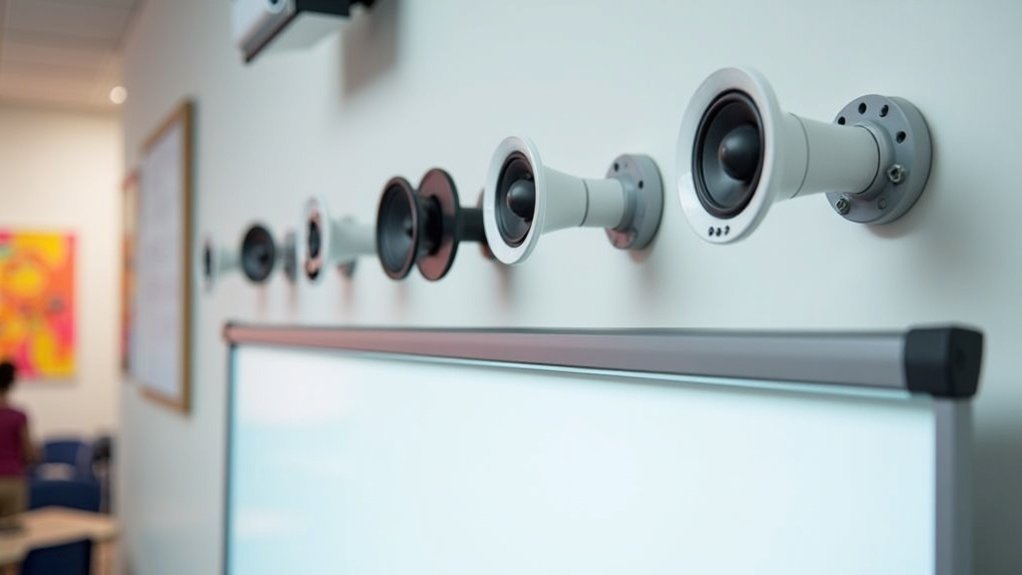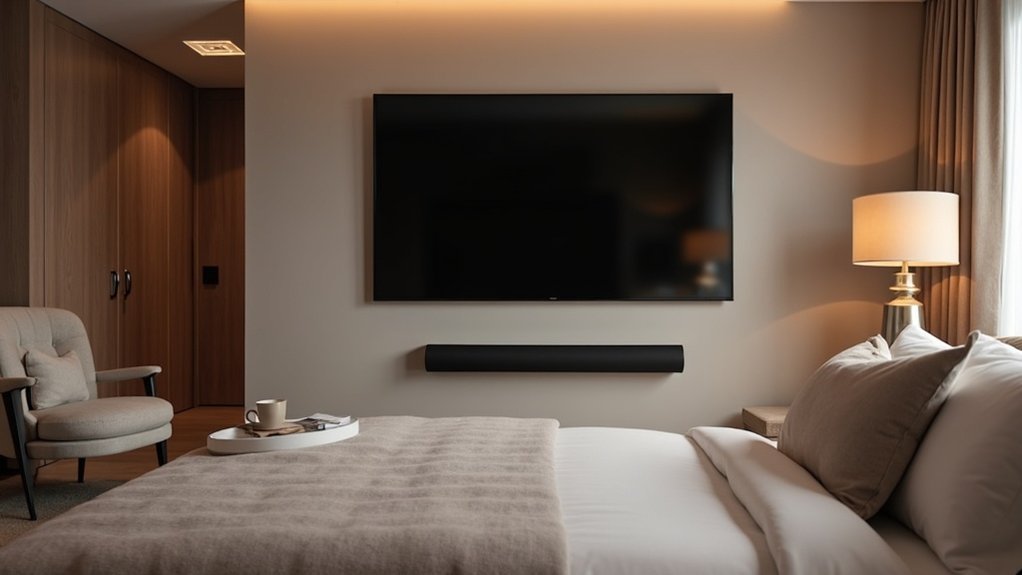
To minimize sound reflection from your soundbar, it’s important to choose wall materials that absorb sound rather than reflect it. Effective choices include mineral wool, fiberglass panels, and wood fiber, as these materials enhance audio clarity by reducing unwanted noise. Additionally, fabrics like wool or cotton can significantly improve sound absorption. By selecting these materials with absorptive properties, you can greatly enhance your soundbar experience. For further insights on material options and practical applications to optimize your soundbar audio, explore our resources for greater acoustical benefits.
Key Takeaways
- Mineral wool effectively absorbs sound, minimizing reflection and enhancing audio clarity specifically for soundbars.
- Acoustic panels made from fiberglass are porous and significantly reduce sound reflections, making them ideal for soundbar setups.
- Wood fiber panels provide effective sound damping while offering a natural aesthetic, benefiting soundbar performance.
- Traditional fabrics like wool and cotton improve sound absorption when used as wall coverings, enhancing the audio experience from soundbars.
- Incorporating absorptive materials, like acoustic foam, reduces echoes and optimizes soundbar performance, ensuring a clearer sound experience.
Understanding Sound Reflection in Wall Materials
When selecting wall materials for your soundbar setup, it’s crucial to understand how sound reflection impacts audio performance.
Materials like drywall and wood paneling tend to have lower sound reflection properties compared to harder surfaces like concrete and masonry, which can reflect sound waves back into the room.
To enhance your soundbar’s audio quality, incorporating absorptive materials, such as acoustic panels made from fiberglass or mineral wool, can significantly reduce sound reflection.
Additionally, the thickness and density of wall materials play a vital role in sound absorption; thicker and denser materials are more effective at absorbing sound.
The Importance of Sound Absorption
Sound absorption plays an essential role in optimizing the acoustic environment of any space, particularly when it comes to enhancing the performance of your soundbar.
Sound absorption is crucial for improving the acoustic environment and maximizing your soundbar’s performance.
To effectively reduce sound and unwanted noise in relation to your soundbar setup, consider the following:
- Utilize sound absorbing materials like fiberglass and mineral wool in the room where your soundbar is located.
- Incorporate acoustic panels or baffles around your soundbar to limit sound reflections and improve clarity.
- Choose materials with high absorption coefficients in the vicinity of your soundbar for enhanced acoustic performance.
- Design solutions tailored to your space’s specific frequency needs to ensure your soundbar delivers the best possible sound experience.
Top Wall Materials for Minimizing Sound Reflection
To create an ideal acoustic environment for your soundbar, selecting the right wall materials is essential in minimizing sound reflection.
Mineral wool stands out as a premier option, effectively absorbing sound, especially at lower frequencies, which greatly enhances your soundbar’s performance.
Acoustic panels made from fiberglass are also highly effective due to their porous nature, absorbing sound waves instead of reflecting them, ensuring that you enjoy clear audio.
Additionally, wood fiber panels offer a natural aesthetic while dampening sound reflection, making them a stylish choice for soundbar setups.
Traditional fabrics like wool and cotton can further enhance sound absorption when used as wall coverings, providing valuable absorptive benefits that improve your overall listening experience.
Absorptive Vs Reflective Materials: a Comparison
While many soundbar enthusiasts prioritize audio quality, understanding the distinctions between absorptive and reflective materials can significantly enhance your soundbar experience.
Here’s a comparison tailored for soundbar users:
- Absorptive Materials: Fiberglass and mineral wool are excellent for sound absorption, as they convert sound energy into heat, minimizing unwanted noise.
- Reflective Materials: Concrete and metal surfaces tend to bounce sound waves, which can amplify noise and diminish clarity in soundbar performance.
- Sound Transmission Class (STC): Absorptive materials typically possess higher STC ratings, which indicate superior sound control and an improved listening environment for your soundbar.
- Acoustic Foam: This specialized absorptive material is designed to reduce echo and reverberation, thereby enhancing the overall audio experience delivered by your soundbar.
Selecting the right materials is crucial for maximizing your soundbar’s performance in any setting.
Benefits of Using Absorptive Materials
Using absorptive materials in soundbar design greatly enhances sound quality by minimizing noise reflection and reducing reverberation.
This leads to a more enjoyable audio experience, particularly in environments where sound clarity is essential.
Additionally, these materials contribute to noise pollution reduction, creating a quieter atmosphere for you and your neighbors while enjoying your favorite movies or music.
Enhanced Sound Quality
When you integrate a high-quality soundbar into your audio setup, you’ll notice a remarkable enhancement in sound quality.
These devices effectively optimize sound output, providing a richer and more immersive listening experience. Here are some benefits you’ll experience:
- Enhanced clarity and detail in sound reproduction for movies and music.
- Improved dialogue intelligibility, making it easier to follow conversations in films and shows.
- Reduced distortion levels, ensuring you enjoy crisp sound without unwanted noise.
- Immersive audio experience with surround sound capabilities, creating a more engaging environment.
Utilizing a soundbar guarantees enhanced sound quality, significantly elevating your overall listening experience.
Noise Pollution Reduction
Integrating high-quality soundbars into your audio environment not only enhances sound quality but also plays an essential role in reducing noise pollution.
Modern soundbars are designed with advanced technology that optimizes sound delivery, minimizing unwanted sound reflections and enhancing your listening experience. By choosing soundbars with built-in acoustic features, you can achieve significant noise control, ensuring that you enjoy clear audio without the distraction of ambient noise.
Research indicates that premium soundbars can effectively improve sound clarity and reduce background noise, creating a more immersive experience.
Implementing these audio solutions not only elevates your entertainment setup but also contributes to a more comfortable living space by managing sound pollution effectively.
The Role of Acoustic Panels in Sound Absorption
Acoustic panels play an essential role in sound absorption, enhancing the overall audio experience when using soundbars by markedly reducing echo and reverberation in various environments.
To maximize the effectiveness of your soundbar setup, consider these factors:
- Material Composition: Opt for high-density materials like fiberglass for acoustic panels to complement your soundbar’s audio quality.
- Thickness: Thicker panels tend to absorb lower frequencies better, which can enhance the bass response of your soundbar.
- Density: Denser panels typically offer higher absorption coefficients, sometimes reaching 0.9, helping to create a more immersive listening environment.
- Strategic Placement: Install acoustic panels on walls and ceilings around your soundbar to minimize sound reflections and improve overall audio clarity.
Natural Vs Synthetic Sound Absorbing Materials
When selecting sound-absorbing materials for your soundbar setup, you’ll discover that natural materials like wool and cotton excel in managing sound reflections and enhancing audio clarity.
Conversely, synthetic options such as open-cell polyurethane foam can be more cost-effective and easier to install, though they mightn’t perform as well at lower frequencies.
It’s also important to consider the environmental impact of your choices, ensuring you strike a balance between acoustic performance and sustainability.
Natural Material Properties
Natural materials, such as wool, cotton, and velvet, possess inherent sound absorption properties that can enhance the audio experience when used in conjunction with soundbars.
When considering their effectiveness in reducing sound reflections in various environments, you should note the following:
- Wool: Absorbs a wide range of frequencies, especially high frequencies, making it a great companion to soundbars for clearer dialogue and music.
- Cotton: Offers decent sound absorption, primarily effective against mid to high frequencies, which can complement the audio output of a soundbar.
- Mineral Wool: Excels in low frequency absorption due to its density, helping to manage bass response and improving overall sound quality.
- Wood Fiber: Provides aesthetic benefits while being less effective than other natural materials, but still contributes to sound absorption, enhancing the overall auditory environment around a soundbar.
Choosing the right natural material alongside your soundbar can greatly improve your audio experience.
Synthetic Material Advantages
Synthetic sound-absorbing materials offer distinct advantages when integrated with soundbars, particularly regarding installation and performance. Lightweight options like acoustic foam and polyester simplify setup, making them ideal for enhancing the acoustics of soundbar systems.
Durable synthetic fabrics, such as microfiber suede, enhance sound absorption while resisting moisture, ensuring longevity for your audio equipment. Unlike natural materials, synthetic options can be engineered for specific acoustic properties, providing tailored solutions that complement soundbars and their sound control challenges.
Additionally, open-cell structures in synthetic foams allow for effective sound absorption across a wide frequency range, improving the overall audio experience. Their versatility also facilitates modern design integration, achieving both aesthetic appeal and optimal sound absorption in spaces like living rooms and entertainment areas.
Environmental Impact Considerations
While soundbars offer advantages in installation and audio performance, their environmental impact warrants careful consideration. Here’s what you should know:
- Natural sound-absorbing materials, like fiberglass and wood fiber, can effectively minimize sound reflection in the audio experience.
- Many synthetic components in soundbars often originate from petroleum, raising environmental concerns.
- Natural materials used in soundbar construction are typically biodegradable, supporting ecosystem health.
- Choosing soundbars with natural alternatives enhances indoor air quality by reducing VOCs emitted by synthetic materials.
Practical Tips for Improving Sound Quality
To enhance sound quality when using a soundbar in your space, consider utilizing absorptive materials that effectively reduce sound reflections. Incorporate fiberglass panels, as they absorb a broad frequency spectrum, minimizing noise from hard surfaces that can interfere with audio clarity.
Enhance your soundbar experience by using absorptive materials like fiberglass panels to minimize sound reflections and improve audio clarity.
Heavy drapes or acoustic curtains hung over windows will also absorb sound waves, reducing echoes that can affect the listening experience. Opt for wood fiber materials for wall coverings to maintain a natural aesthetic while providing sound absorption that complements your soundbar’s audio output.
Additionally, install acoustic foam panels with an open-cell structure to dampen high-frequency sounds, ensuring that dialogues and music from your soundbar are crisp and clear.
Finally, consider mineral wool insulation within wall cavities, which excels at absorbing low-end frequencies, greatly improving your overall sound clarity and enhancing the performance of your soundbar.