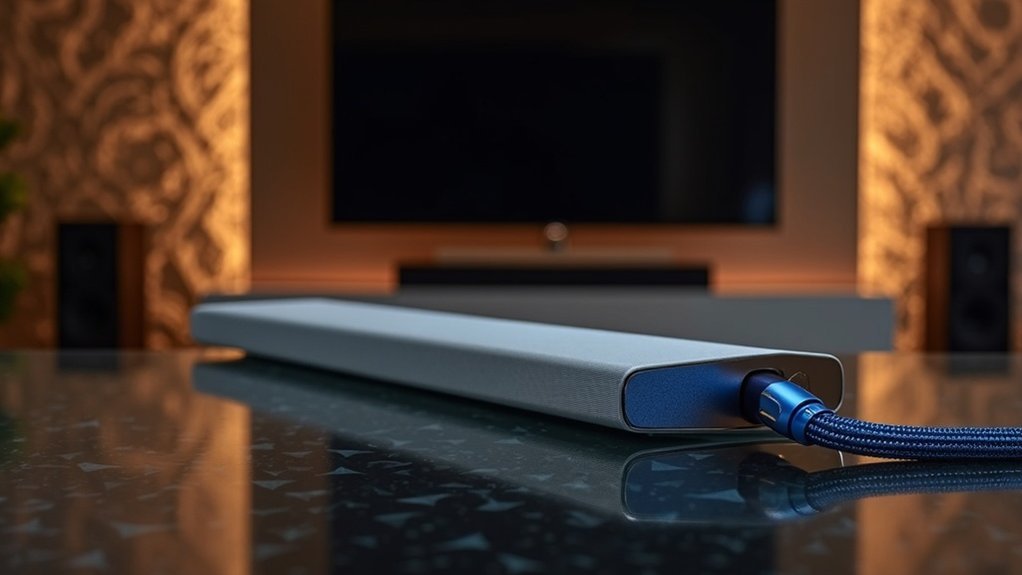
To fully utilize eARC soundbars, ensure you have HDMI 2.1 compatibility, as it provides the necessary bandwidth for advanced audio formats like Dolby Atmos and DTS:X. Confirm that both your soundbar and TV are equipped with HDMI eARC ports, clearly labeled for easy identification. To guarantee peak sound quality, utilize Ultra High-Speed HDMI cables. This setup will create a seamless and immersive audio experience in your home theater. Explore additional tips to effectively enhance your eARC soundbar setup.
Key Takeaways
- HDMI version 2.1 is essential for eARC functionality in soundbars, as earlier versions do not support eARC.
- Ensure that your soundbar and connected devices have HDMI ports labeled as eARC for compatibility and optimal performance.
- Use Ultra High-Speed HDMI cables to support the bandwidth requirements necessary for uncompressed audio formats in soundbars.
- Enable Consumer Electronics Control (CEC) to achieve unified control of your soundbar and other connected devices through the HDMI connection.
- For the best sound quality from your soundbar, ensure the audio output format is set to bitstream or PCM.
Understanding HDMI and Its Importance for Soundbars
HDMI plays an essential role in enhancing your soundbar’s performance, especially with the introduction of HDMI eARC (Enhanced Audio Return Channel). This technology supports high-bitrate audio formats like Dolby Atmos and DTS:X, providing immersive audio experiences that elevate your home entertainment.
To fully utilize eARC’s capabilities, both your soundbar and TV must have HDMI 2.1 eARC-compatible ports, clearly labeled as “eARC.” This feature enables uncompressed audio transmission, significantly improving audio fidelity up to 24-bit/192kHz compared to standard ARC.
While standard HDMI cables with Ethernet may function, using High-Speed HDMI cables ensures full compatibility with HDMI 2.1 features, simplifying connectivity and enhancing your soundbar’s audio control and quality.
What Is HDMI Earc?
HDMI eARC, or Enhanced Audio Return Channel, significantly enhances the audio experience when used with soundbars by supporting higher bandwidth and uncompressed formats like Dolby TrueHD.
To fully benefit from eARC’s capabilities, you’ll need HDMI 2.1 cables and soundbars that are compatible with eARC.
This setup streamlines your connections, allowing multiple audio sources to deliver superior sound quality through a single cable, making your home theater experience even more enjoyable.
Earc Benefits Overview
Enhanced Audio Return Channel (eARC) offers significant benefits for soundbar enthusiasts, allowing you to experience high-bitrate audio formats like uncompressed 5.1 and 7.1 surround sound, along with advanced technologies such as Dolby Atmos and DTS:X.
Operating over a single HDMI cable, eARC simplifies connectivity and guarantees high-quality audio transmission without the clutter of additional cables.
With increased bandwidth, it transmits audio data at rates up to 192kHz, 24-bit, enhancing your immersive audio experience with your soundbar.
For peak performance, both your soundbar and TV must have eARC-compatible HDMI ports, which streamline device communication and automatic format detection.
Required Cable Specifications
To fully leverage the benefits of eARC with your soundbar, ensure you’re using the right cables and equipment.
Verify that your setup includes HDMI version 2.1 cables, as they support the necessary bandwidth requirements for high-bitrate audio formats. For peak performance, opt for Ultra High-Speed HDMI cables, which are essential for transmitting uncompressed audio like Dolby TrueHD and DTS-HD Master Audio.
Additionally, make sure all devices, including your TV and soundbar, have eARC-compatible HDMI ports. This will enhance the audio return channel’s functionality, reduce handshake issues, and ultimately improve your overall audio experience with your soundbar.
Required HDMI Features for Earc Soundbars
To get the most out of your eARC soundbar, you’ll need HDMI 2.1 cables that support higher bandwidth for uncompressed audio.
Ensure that your soundbar and TV are equipped with HDMI ports specifically labeled for eARC, as standard ARC ports won’t deliver the full benefits.
Both devices must be eARC-compatible to avoid reverting to standard ARC limitations, ensuring an optimal audio experience from your soundbar.
Earc Cable Requirements
When connecting an eARC soundbar, using the right HDMI cables is essential for optimal performance. eARC soundbars require HDMI 2.1 cables to fully utilize their advanced audio capabilities, such as support for high-bitrate formats like Dolby Atmos and DTS:X.
For maximum compatibility and bandwidth, it’s best to choose Ultra High-Speed HDMI cables, which are certified to support all HDMI 2.1 features. While standard HDMI cables with Ethernet may work, relying on older cables can restrict audio quality and limit uncompressed audio streams.
To experience the full range of audio formats and up to 32 channels, make sure to prioritize certified cables specifically designed for eARC applications.
Compatible HDMI Ports
How can you ensure your eARC soundbar provides the ultimate audio experience?
First, check that both your TV and soundbar feature HDMI ports that support the Enhanced Audio Return Channel, which is typically found in devices that comply with HDMI 2.1 specifications.
Look for ports specifically labeled “eARC” to confirm their compatibility. This advanced feature enables the transmission of uncompressed audio formats, delivering superior audio quality up to 24-bit/192kHz—capabilities that standard ARC can’t accommodate.
To maximize the performance of your eARC soundbar, it’s crucial to use High-Speed or Ultra High Speed HDMI cables, as they’re designed to handle the increased bandwidth requirements.
Don’t compromise on quality; ensure full compatibility for the best audio results from your soundbar.
Cable Requirements for Earc Compatibility
Achieving eARC compatibility for your soundbar hinges on using the right HDMI cable.
You’ll need an Ultra High Speed HDMI cable, as it supports the higher data rates essential for uncompressed audio formats and high bitrate formats. Only HDMI 2.1 cables guarantee full support for all eARC features.
Confirm that your soundbar has an HDMI port labeled “eARC” for peak performance. If your soundbar and source device, like your TV, aren’t both eARC-capable, you’ll default to ARC’s limitations.
Avoid older HDMI cables, as they won’t handle the necessary bandwidth for the advanced audio formats delivered through eARC.
Setting up Earc Soundbars: Best Practices
Setting up your eARC soundbar requires a few straightforward steps to ensure optimal performance. Follow these best practices for ideal audio quality:
- Verify that both your TV and soundbar are equipped with HDMI eARC ports.
- Use Ultra High Speed HDMI cables to support advanced audio formats, such as Dolby Atmos.
- Connect the soundbar directly to the HDMI eARC port on your TV for the best connection.
- Enable Consumer Electronics Control (CEC) to allow for unified control with a single remote.
After completing the setup, be sure to double-check the audio settings on both devices to confirm they’re utilizing eARC for the finest TV audio experience.
Troubleshooting Common Earc Issues
While enjoying your soundbar’s eARC functionality, you might encounter some common issues that can hinder your audio experience.
First, ensure that both your TV and soundbar support HDMI eARC and look for eARC labeling to confirm compatibility.
If you experience audio dropouts or sync issues, use Ultra High-Speed HDMI cables, as standard ones may not adequately support eARC’s bandwidth.
Check your TV settings to ensure the audio output format is set to bitstream or PCM for optimal sound quality.
If you aren’t receiving audio, try power cycling both devices to reset the HDMI connection.
For ongoing issues, refer to the user manuals for specific troubleshooting steps tailored to your soundbar.
Enhancing Your Home Theater Experience With Earc
After resolving any eARC issues, you can truly enhance your soundbar experience by leveraging the full capabilities of your eARC-enabled device.
Here’s how:
- Enjoy multi-dimensional sound with Dolby Atmos and DTS:X, delivering immersive audio experiences that elevate your home entertainment.
- Utilize HDMI 2.1 cables for high-resolution audio streams up to 192kHz, 24-bit, ensuring that you get the best sound quality from your soundbar.
- Simplify your setup with a single HDMI cable, reducing clutter and complexity while connecting your soundbar to your TV.
- Verify compatibility by checking if both your TV and soundbar support eARC functionality, ensuring seamless audio performance.