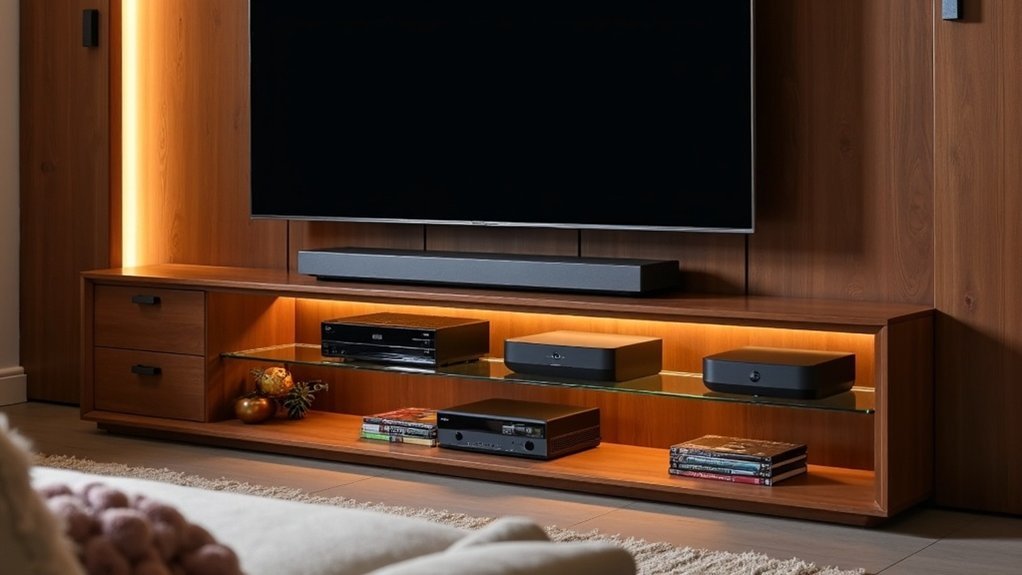
To position your soundbar in a media cabinet, ensure it has at least 3 inches of clearance around all sides for optimal airflow and sound clarity. Closed cabinets can muffle audio and obstruct remote signals, so it’s best to avoid them. An open-shelf design is ideal, as it enhances sound projection and helps prevent overheating. Make sure the soundbar is free from obstructions above and maintains a minimum of 4 inches of space from the TV for the best performance. There’s plenty more to discover on how to optimize your soundbar setup.
Key Takeaways
- Ensure at least 3 inches of clearance around the soundbar to prevent overheating and maintain optimal sound quality.
- Use open-shelf designs in your media cabinet to enhance airflow and reduce the risk of muffled audio.
- Position the soundbar at least 4 inches below the TV to avoid interference with sound projection and ensure the best listening experience.
- Avoid closed cabinet doors to allow remote signals to effectively reach the soundbar, ensuring seamless control.
- Regularly evaluate and adjust the soundbar’s position for improved audio clarity and overall performance in your home entertainment setup.
Importance of Soundbar Placement
When positioning a soundbar in a media cabinet, its placement is crucial for achieving optimal audio performance. Properly placing the soundbar ensures unobstructed sound waves, enhancing both sound quality and the surround sound experience.
Maintain at least 0.4 inches (1 cm) of space from rear surfaces to prevent sound degradation. It’s best to choose a cabinet with ventilation or open shelving to avoid muffling the sound quality.
Ensure at least 0.4 inches of clearance at the back for optimal sound performance. Opt for ventilated cabinets to enhance audio clarity.
Never place the soundbar behind closed cabinet doors, as this can interfere with remote signals and limit audio output.
Regularly evaluate its position in relation to surrounding objects to maximize audio clarity and improve your overall listening experience.
Pros and Cons of Cabinet Placement
While placing a soundbar in a cabinet can enhance the aesthetics of your media setup, it comes with both advantages and drawbacks.
On the plus side, it creates a neat appearance, effectively hiding clutter. However, sound quality may suffer, as audio can become muffled and less clear due to restricted airflow and reflections.
Additionally, the risk of overheating increases without proper ventilation, which can negatively impact your soundbar’s performance. Remote control signals often struggle to reach soundbars in closed cabinets, affecting convenience.
To mitigate these issues, ensure there’s at least 3 inches of space around your soundbar or consider open-shelf designs for optimal sound quality and accessibility.
Making a Cabinet Work for Your Soundbar
To make a cabinet work effectively for your soundbar, prioritize proper ventilation and accessibility.
Ensure at least 3 inches of clearance around the soundbar to prevent overheating and maintain optimal sound quality. Choose open-shelf style cabinets, as they enhance airflow and reduce muffled audio.
Confirm there’s enough space for all soundbar connections, including power and audio cables, to ensure functionality isn’t hindered.
Consider flush mount options or floating entertainment stands for improved accessibility and aesthetics.
Regularly check the soundbar’s placement to keep it unobstructed and free from clutter, which will enhance audio clarity and overall performance.
Alternative Placement Options
Although many people opt for placing a soundbar in a media cabinet, there are several alternative placement options that can significantly enhance audio performance.
Consider these strategies for the best audio experience:
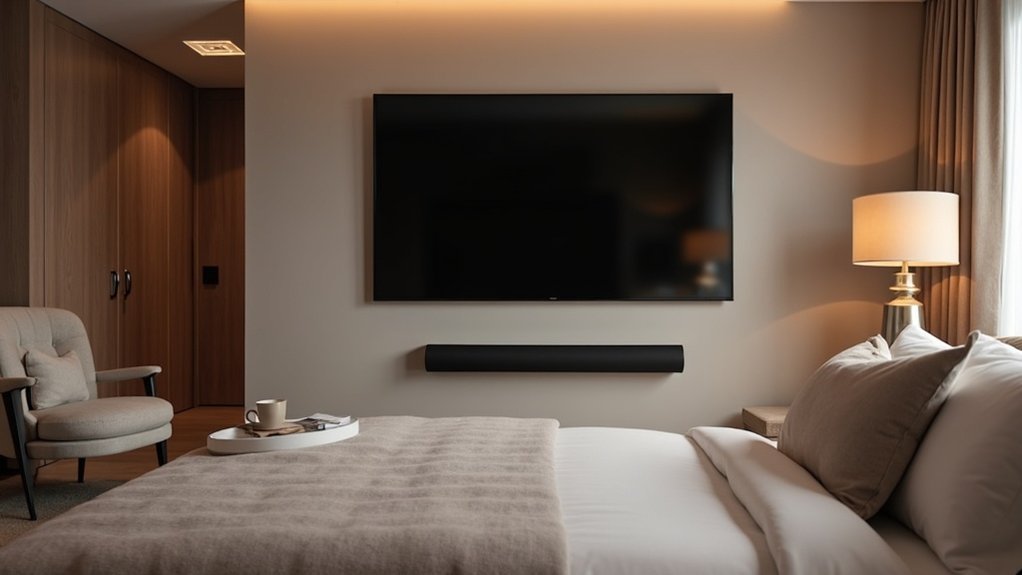
- Wall Mounting: Position the soundbar below your TV to improve sound projection and save space while creating a sleek look.
- Open Shelf: Utilize an open shelf style cabinet to prevent sound muffling and ensure proper ventilation around the soundbar, allowing for optimal audio delivery.
- Floating Stand: Elevate the soundbar to ear level, which may involve adjusting the cabinet height or using a floating stand, resulting in a more immersive listening experience.
These placements not only keep your media area organized but also optimize sound quality for your entertainment needs.
Tips for Optimal Sound Quality
For ideal sound quality with your soundbar, it’s crucial to position it correctly within a media cabinet.
Ensure it’s at least 3 inches away from the back to prevent sound distortion and achieve the best audio projection.
Place the soundbar on an open shelf to avoid muffling and guarantee clarity.
Keep it free from obstructions by avoiding objects on top, which can interfere with speaker functions.
Maintain a minimum of 4 inches between the soundbar and the TV to prevent sound interference.
Finally, choose a cabinet that promotes good ventilation to avoid overheating, as inadequate airflow can negatively impact your soundbar’s performance.