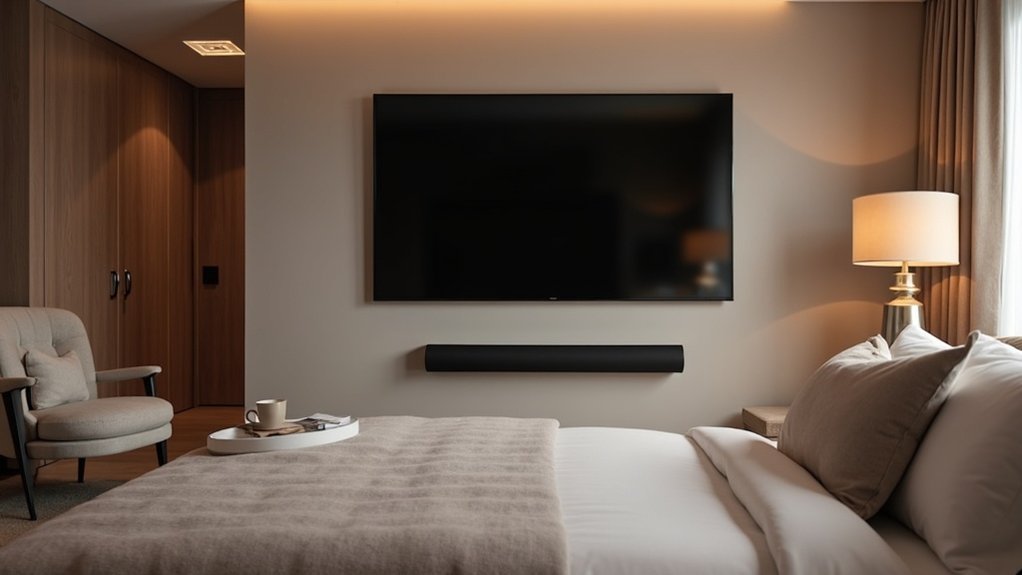
To test latency on your soundbar, begin by using high-definition video content that features clear audio-visual cues, such as lip movements. Carefully observe the synchronization of sounds with the visuals. For a more accurate measurement, consider utilizing a smartphone app specifically designed for assessing latency. Additionally, experimenting with wired connections, like HDMI ARC or optical cables, can help minimize latency. If you’re interested in exploring more testing methods and adjustment techniques, there’s a wealth of information available on soundbars.
Key Takeaways
- Use high-definition video content with clear visual cues, such as lip movements, to identify audio delay issues on your soundbar.
- Connect the soundbar using wired methods like HDMI ARC or optical cable for lower latency testing, ensuring optimal audio performance.
- Adjust audio settings on the soundbar, focusing on audio delay or lip sync features for better synchronization between sound and picture.
- Utilize smartphone apps designed to measure audio latency for a more quantifiable assessment of your soundbar’s performance.
- Regularly check and update the firmware of both the soundbar and TV to enhance audio performance and compatibility for the best listening experience.
Understanding Audio Delay
Understanding audio delay is essential for achieving the best sound quality from your soundbar, especially since even minor latencies can disrupt your viewing experience.
Audio delay, or latency, occurs when there’s a timing mismatch between your soundbar’s output and the video displayed on your screen. This discrepancy often arises during the decoding processes of formats like DTS or Dolby Digital.
To mitigate sync issues, utilize your soundbar’s settings to adjust the lip sync. If you’re using an optical connection, switching to PCM audio format can reduce latency, allowing your TV to handle audio unpacking, thereby enhancing your overall viewing experience with your soundbar.
Connection Methods for Testing Latency
When testing latency on your soundbar, the choice of connection method is crucial for obtaining accurate results. Opting for a wired connection, such as HDMI ARC or an optical cable, generally results in lower latency compared to Bluetooth. Ensure that all connections are secure, as loose cables can lead to delays. Additionally, adjust the audio settings on both your TV and soundbar, focusing on features like “audio delay” or “lip sync” to optimize synchronization.
| Connection Method | Latency Level |
|---|---|
| HDMI ARC | Low |
| Optical Cable | Low |
| Bluetooth | High |
| Coaxial Cable | Medium |
Using Visual Cues for Latency Assessment
How can you effectively assess latency on your soundbar? Start by watching high-definition video content with clear visual cues, such as a person speaking or a clapperboard. Pay attention to the timing of the audio relative to the movements of the speaker’s lips or the clapper’s clap.
A noticeable delay indicates latency issues that can disrupt your viewing experience with your soundbar. To quantify this delay, consider using a smartphone app designed to measure audio latency.
Regularly test various audio formats and sources to determine if latency varies based on your connection settings or content type, ensuring a thorough evaluation of your soundbar’s performance.
Adjusting Soundbar Settings
After evaluating latency through visual cues, you can further refine the audio-video sync by adjusting your soundbar’s settings. Here’s how:
- Access the audio settings using your remote or app to adjust the audio delay or lip sync features specifically designed for soundbars.
- Consult your soundbar’s user manual for tailored instructions on latency adjustments for your specific model.
- Fine-tune the built-in audio delay options to effectively sync sound with video playback, ensuring a seamless experience.
- Regularly check for firmware updates, as these can enhance your soundbar’s audio performance and address synchronization issues.
Additionally, disabling unnecessary sound modes may improve your audio connection, optimizing your soundbar’s overall performance.
Testing With Latency Apps and Tools
To effectively measure audio latency with your soundbar, you can utilize specialized latency apps and tools designed to provide precise feedback on sound and video synchronization.
Apps like “Audio Delay Test” or “Latency Test” allow you to compare audio delay by playing sound simultaneously with a visual cue, helping you gauge the delay based on your reaction time.
Some smartphone apps offer real-time measurements, while online testing tools may let you adjust audio formats to examine how different settings affect latency.
Ensure your soundbar is properly set up and minimize external interference for the most accurate results during testing to enhance your overall listening experience.
Wired vs. Wireless Connections
When deciding between wired and wireless connections for your soundbar, it’s essential to bear in mind the impact on audio latency.
Wired connections, such as optical connections or HDMI ARC, generally provide lower latency, ensuring better audio synchronization with your TV and other devices.
Here are key points to reflect on:
- Wired connections eliminate sound delay caused by compression.
- Bluetooth connections can introduce lag of 100-300 milliseconds, which may affect your listening experience.
- Wireless codecs like aptX Low Latency can help reduce lag, but they don’t completely eliminate it.
- For gaming or fast-paced content where audio precision is crucial, a wired connection is typically the most reliable choice.
Troubleshooting Common Latency Issues
Latency issues can significantly impact your audio experience, especially when using a soundbar with a wireless connection. Begin by examining the soundbar’s audio settings, as many models include built-in audio delay adjustments. If your soundbar connects to a streaming device or Blu-ray player, be sure to explore their audio adjustment features as well. Regular firmware updates for both your soundbar and TV can improve compatibility and address any existing audio delays. Use the table below to identify potential fixes:
| Issue | Solution | Device Setting |
|---|---|---|
| Audio Delay | Adjust lip sync settings | Soundbar/TV |
| Inconsistent Sync | Update firmware | Soundbar/TV |
| Wireless Interference | Switch to wired connection | Soundbar to the TV |
| Format Compatibility | Change audio format | Soundbar settings |
| Streaming Latency | Test with wired device | Streaming device settings |
Seeking Community Support for Solutions
When addressing latency issues with your soundbar, engaging with community forums dedicated to soundbars can yield valuable troubleshooting tips.
Sharing your specific soundbar model and connection methods often attracts targeted advice from users who’ve faced similar experiences.
Community Troubleshooting Tips
As you seek solutions for audio latency issues with your soundbar, tapping into community forums can be invaluable.
Here are some troubleshooting tips from users like you:
- Test Different Connections: Experiment with wired vs. Bluetooth connections to identify which reduces the delay problem effectively.
- Adjust Audio Settings: Modify latency and audio format options on your soundbar to improve synchronization.
- Compatibility Checks: Look for discussions on your specific soundbar model and its compatibility with various systems, including Windows 11.
- Detail Your Issue: Provide a thorough description of your audio settings and latency problem to receive targeted advice from the community.
Share Your Experiences
How effectively have you addressed audio latency issues with your soundbar? Many users find that testing sound sync by playing videos with clear audio-visual cues, like a clap, reveals essential delays.
If you’re using Bluetooth to connect to your soundbar, consider switching to a wired connection; many report reduced latency with this method. Sharing your experiences on community forums dedicated to soundbars can also provide valuable insights and solutions.
Don’t forget to keep your soundbar and TV firmware up to date, as regular updates can greatly enhance performance and minimize latency. Your findings could help others facing similar challenges with their soundbars.