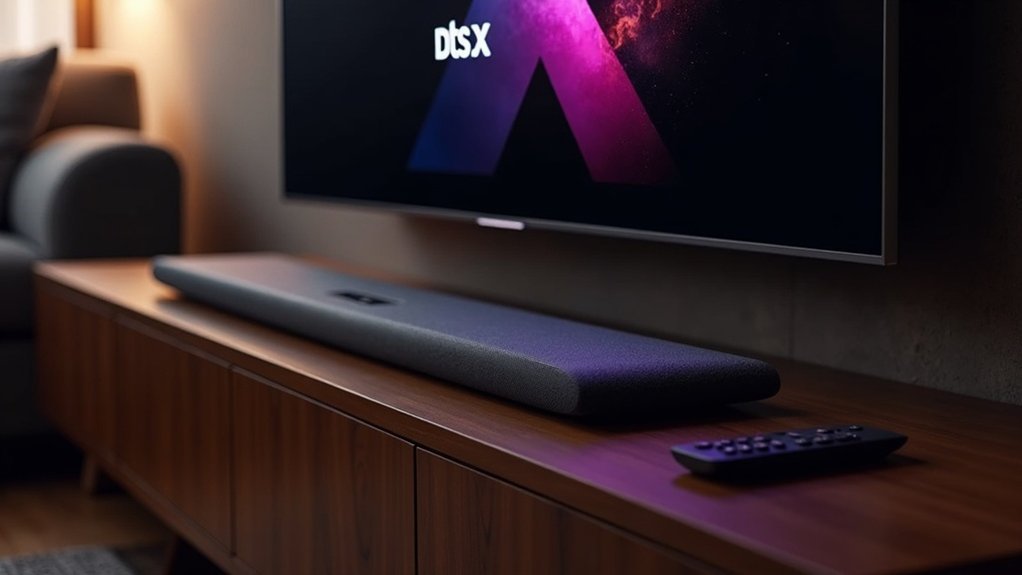
To test DTS:X on your soundbar, first confirm that it supports DTS:X by reviewing its specifications. Connect your audio source using a high-speed HDMI cable and ensure it is set to bitstream output. Select content with a DTS:X audio track from platforms like Netflix or a compatible Blu-ray. Adjust your soundbar’s audio settings to enable DTS:X output. Finally, play the content and experience the surround sound features. If you encounter any issues, there are helpful troubleshooting tips available to assist you.
Key Takeaways
- Check the soundbar specifications and user manual for explicit DTS:X support before testing.
- Connect a Blu-ray player or streaming device directly to the soundbar’s HDMI ARC port using a high-speed HDMI cable.
- Select content that explicitly states it includes a DTS:X audio track for optimal testing results.
- Adjust the audio settings on both the soundbar and source device to ensure bitstream or pass-through mode is enabled.
- Verify that the DTS:X audio track is selected during playback and check for any necessary settings adjustments in the soundbar’s menu.
Verify Soundbar Compatibility With DTS X
Before diving into testing DTS:X on your soundbar, it’s essential to verify that your device is compatible with this advanced audio format.
Check your soundbar’s specifications to confirm it explicitly states DTS:X support, as not all models can decode this format. Consult the user manual or the manufacturer’s website for detailed compatibility information, including any necessary firmware updates.
Ensure your soundbar is designed for multi-channel audio output, as this capability is vital for effectively reproducing DTS:X content. Additionally, verify support for other formats like Dolby Atmos, and look for any specific settings that may need enabling for optimal playback.
Connect Your Audio Source Properly
To connect your audio source properly to your soundbar, start by using a high-speed HDMI cable that supports DTS:X.
Next, set your audio source to bitstream output, ensuring the DTS:X signal transmits directly to the soundbar for optimal audio quality.
Finally, check the audio settings on your soundbar to confirm that pass-through is enabled, allowing for peak performance and an immersive sound experience.
Use High-Speed HDMI
A high-speed HDMI connection is essential for testing DTS:X on your soundbar, as it guarantees the necessary bandwidth for transmitting high-quality audio.
To optimize your soundbar setup, follow these tips:
- Use certified high-speed HDMI cables for reliable performance.
- Connect your Blu-ray player or streaming device directly to the soundbar’s HDMI ARC port for the best audio experience.
- Ensure all HDMI connections are secure to prevent any signal degradation that could affect sound quality.
- Bypass any intermediary devices that don’t support DTS:X pass-through to maintain audio fidelity.
- Configure your audio source settings to output in bitstream mode, allowing your soundbar to effectively decode Dolby and DTS:X tracks for a superior listening experience.
Enable Bitstream Output
Enabling bitstream output is essential for ensuring that your audio source effectively transmits the DTS:X signal to your soundbar.
First, check that your audio source, such as a Blu-ray player or streaming device, is set to output in bitstream mode. This setting allows the DTS:X audio signal to pass through unaltered.
Next, connect your audio source directly to the soundbar using a high-speed HDMI cable that supports Audio Return Channel (ARC). Make sure the soundbar is plugged into a compatible HDMI port.
Secure all connections to prevent signal loss, and select content that specifies DTS:X audio for the best testing experience with your soundbar.
Check Audio Settings
While you may have enabled bitstream output on your soundbar, ensuring your audio source is properly connected is equally essential for optimizing the DTS:X experience.
Follow these steps to configure your audio settings effectively:
- Set your Blu-ray player or streaming device to bitstream or pass-through mode for optimal soundbar performance.
- Use high-speed HDMI cables for a direct connection to the soundbar to ensure the best audio quality.
- Confirm that the content you’re playing includes a DTS:X audio track and select it if necessary to fully utilize your soundbar’s capabilities.
- Choose a soundbar preset that supports multi-channel or surround sound formats to enhance your listening experience.
- Verify that all additional speakers or subwoofers are recognized and properly connected to your soundbar for a complete audio setup.
These adjustments will significantly enhance your overall audio performance with your soundbar.
Select the Right Content With DTS X Track
To truly experience the immersive sound of DTS:X on your soundbar, it’s crucial to select content that explicitly states it includes a DTS:X audio track.
Look for titles on popular streaming services like Netflix and Disney+, as they often feature this advanced audio format. When purchasing or renting Blu-ray discs, check for labels that indicate DTS:X support.
Use media players or apps that offer clear audio track options to ensure you can select DTS:X during playback. Additionally, confirm that your soundbar’s audio setup is configured correctly to support DTS:X playback for optimal performance.
Adjust Audio Output Settings
Selecting the right content with a DTS:X track sets the foundation for an immersive audio experience, but it won’t deliver its full potential without proper audio output settings on your soundbar.
To adjust these settings, follow these steps:
- Navigate to your soundbar’s audio output settings.
- Select bitstream or pass-through mode for ideal audio compatibility.
- Enable DTS:X output if available, as defaults may be set to stereo or PCM.
- Verify the correct DTS:X audio track is selected when streaming.
- For advanced options, switch to expert mode in the audio settings.
These adjustments guarantee your soundbar decodes DTS:X properly for an exceptional listening experience.
Test and Observe Surround Sound Features
Testing and observing the surround sound features of your soundbar is essential for confirming that DTS:X is functioning correctly.
Start by ensuring your soundbar is connected via HDMI to a compatible source device that supports high-quality audio. Select content that explicitly mentions DTS:X audio and switch to this track using your remote or on-screen menu.
Check the audio settings to confirm that surround sound features are activated. As you listen, pay attention to the distinct immersive audio cues, such as sounds moving around and above you, indicating that your soundbar is successfully decoding and delivering the full DTS:X experience.
Troubleshooting Common Issues
To troubleshoot DTS:X issues with your soundbar, first verify your audio source settings to ensure it’s set to output in bitstream or pass-through mode.
Next, check that the content you’re playing includes a DTS:X audio track, as not all media supports this format.
Verify Audio Source Settings
When ensuring optimal DTS:X playback on your soundbar, verifying your audio source settings is crucial. Follow these steps to troubleshoot effectively:
- Set your Blu-ray player or streaming device to output audio in bitstream or pass-through mode for the best sound quality.
- Enable pass-through for DTS codecs within the audio settings of your media player app.
- Confirm that the content you’re playing features a DTS:X audio track by checking the audio options during playback.
- Use high-speed HDMI cables for all connections, as optical cables may not support the necessary bandwidth for DTS:X audio.
- If issues persist, consider switching to advanced mode in your source device’s audio settings to access more detailed configuration options.
Ensure that everything is properly connected to enjoy a seamless audio experience!
Check Content Compatibility
How can you ensure your soundbar is compatible with DTS:X audio? First, check that the media you’re using explicitly states it includes a DTS:X audio track, as not all titles support this format.
Opt for platforms like Netflix or Blu-ray discs that are known for their DTS:X compatibility for the best audio experience.
Make sure your soundbar’s audio settings are configured correctly; it should be set to output in bitstream mode to enable DTS:X decoding.
Additionally, keep your soundbar’s firmware updated, as updates can enhance compatibility with DTS:X.
Lastly, during playback, select the correct audio track, as some media may default to stereo or other formats instead of DTS:X.