To reduce background noise on your soundbar, start by positioning it at ear level, about 36 inches from the floor, and avoid placing it too close to walls. Activate the dialogue enhancement mode and adjust the equalizer settings to boost midrange frequencies while decreasing bass levels. Regularly updating the firmware can also help enhance noise reduction features. Additionally, consider soundproofing your room by sealing any gaps in windows and utilizing acoustic panels for better sound quality. For more tips on optimizing your soundbar experience, there’s a wealth of information available to explore.
Key Takeaways
- Enable the Dialogue Enhancement mode on your soundbar to improve speech clarity and minimize distractions from background noise.
- Adjust equalizer settings to lower bass frequencies, which can help reduce background noise interference.
- Position the soundbar at ear level, around 36 inches off the floor, for optimal dialogue clarity.
- Keep windows and doors closed to limit external ambient noise that can disrupt your soundbar’s audio performance.
- Regularly update your soundbar’s firmware to access the latest noise reduction technologies and improvements.
Understanding Background Noise in Soundbars
When you’re watching a movie or show, background noise from your environment can disrupt the audio experience, making it difficult to catch every word. Ambient sounds like hums or traffic often obscure dialogue clarity.
Soundbars are specifically designed to tackle these challenges, incorporating built-in noise reduction technologies that enhance both volume and clarity. Many soundbars offer specialized modes, such as dialogue enhancement, to highlight speech and minimize distractions.
Furthermore, regular firmware updates can enhance performance, including improvements to noise reduction algorithms, ensuring a better dynamic range for clearer audio output. This allows you to fully enjoy your viewing experience without the interference of background noise.
Proper Soundbar Placement for Optimal Audio
To achieve ideal audio performance from your soundbar, consider its height, room acoustics, and proximity to walls.
Position the soundbar at ear level to enhance dialogue clarity, while also ensuring it isn’t too close to any walls, as this can distort sound.
Additionally, take into account the room’s acoustics and any potential obstacles that may interfere with sound dispersion for the best soundbar experience.
Ideal Soundbar Height
For ideal audio performance, positioning your soundbar at ear level is crucial, as this alignment enhances the listening experience.
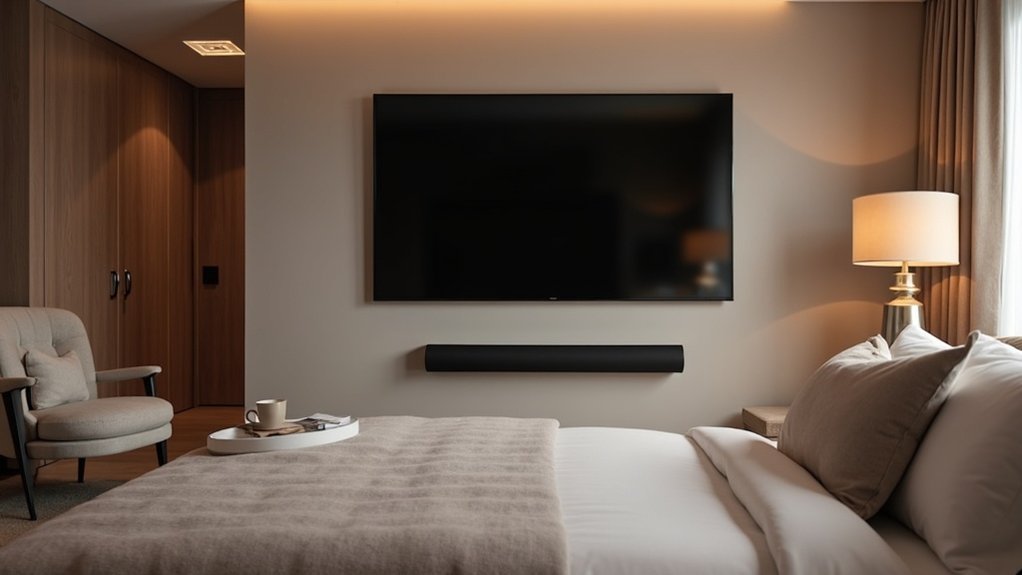
Typically, the best soundbar height is around 36 inches from the floor for most seated viewers. Placing it directly below the TV screen ensures that sound appears to emanate from on-screen action, improving immersion.
Avoid housing the soundbar in cabinets or near walls, as this can muffle sound and degrade clarity. If wall-mounted, position it 2-3 inches below the TV to avoid obstruction.
Keeping the soundbar free from decorative items or furniture enhances sound quality and minimizes background noise interference.
Room Acoustics Consideration
Proper soundbar placement greatly impacts audio quality, especially regarding room acoustics. To enhance dialogue clarity, position your soundbar at ear level when seated, ideally on a shelf or wall mount.
Avoid corners and walls to minimize bass buildup and prevent muddiness, leading to clearer sound reproduction. Ensure the soundbar’s front speakers face the primary listening area, unobstructed by furniture, to prevent sound loss.
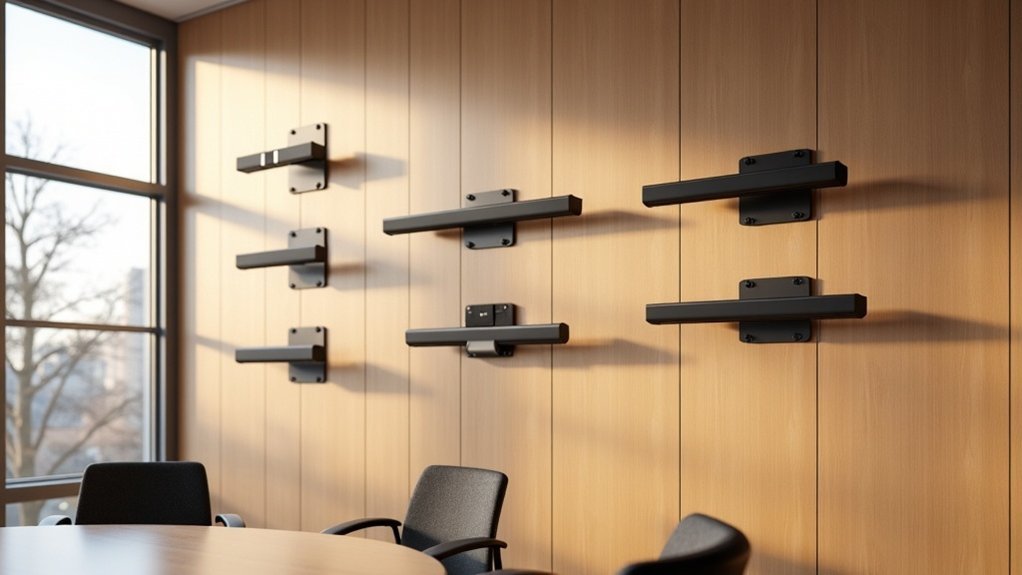
Utilizing wall brackets can elevate the soundbar, reducing background noise interference. Experiment with placement and angle it slightly upward towards you to improve direct sound, enhancing your overall listening experience while mitigating ambient noise in the room.
Distance From Walls
Maintaining a distance of at least 3-6 inches from walls is essential for optimal soundbar performance. This space helps prevent sound reflections that can create muddiness, thereby enhancing clarity in audio output.
Position your soundbar at ear level for direct sound projection, which minimizes background noise interference. Avoid placing the soundbar in corners or enclosed spaces, as these can lead to unwanted bass buildup that masks dialogue clarity.
Angling the soundbar slightly towards the listening area can also help direct audio more effectively. Ensure that nearby furniture or décor doesn’t obstruct the soundbar’s speakers, as this is crucial for maintaining ideal audio dispersion and clarity, ultimately enhancing your overall listening experience.
Utilizing Soundbar Settings for Noise Reduction
To effectively reduce background noise when using your soundbar, begin by adjusting the equalizer settings, specifically lowering the bass frequencies.
Additionally, enabling the Dialogue Enhancement mode can significantly enhance speech clarity, allowing you to catch every word without distraction.
These adjustments can greatly improve your listening experience, especially during quieter scenes.
Adjusting Soundbar Equalizer Settings
While adjusting your soundbar’s equalizer settings may seem intimidating, it can greatly enhance your audio experience by reducing unwanted background noise.
Access the equalizer settings via your remote or app to modify frequency levels. Lower the frequencies associated with ambient noise in the lower and mid-range while boosting higher frequencies for clearer dialogue. Experiment with the center channel volume to improve speech clarity.
Additionally, consider using preset modes like ‘Night Mode,’ which are designed to minimize background noise and emphasize vocals.
Regularly updating your soundbar’s firmware is also important for accessing the latest enhancements in noise reduction capabilities, ensuring you get the best sound quality from your device.
Enabling Dialogue Enhancement Mode
Enabling Dialogue Enhancement Mode can significantly elevate your soundbar experience by making speech clearer and more intelligible, particularly in noisy environments.
Many modern soundbars are equipped with this feature, which enhances dialogue clarity while effectively reducing background noise. To activate this mode, simply navigate to your soundbar’s settings using the remote or accompanying app, and look for options labeled “Dialogue Enhancement” or “Voice Clarity.”
You can often customize the intensity of this enhancement to match your listening environment. It’s also important to disable sound effects or surround sound modes, as these can detract from dialogue clarity.
Lastly, don’t forget to regularly check for firmware updates to ensure you’re getting the most out of this feature.
Eliminating External Noise Sources
Reducing external noise sources is essential for enhancing your soundbar’s performance. Start by closing windows and doors to minimize ambient noise interference.
Position the soundbar away from walls and corners, as these areas can amplify external sounds and reflections, ultimately detracting from sound clarity.
Consider using acoustic panels or soundproofing materials in the room to absorb background noise, creating a more conducive environment for your soundbar.
Ensure that mechanical devices, like refrigerators or air conditioners, are distanced from the soundbar to limit interference.
Regularly check your soundbar settings and adjust features such as night mode or speech enhancement to optimize clarity in noisy environments, ensuring you achieve the best listening experience possible.
Adjusting Audio Frequencies With an Equalizer
Adjusting audio frequencies with an equalizer can significantly enhance your soundbar’s performance, especially in noisy environments. By fine-tuning your equalizer settings, you can lower frequencies that contribute to background noise, particularly in the low and mid-range bands.
Boosting midrange frequencies (1 kHz to 4 kHz) improves vocal clarity, making dialogue clearer amidst distractions, which is essential for an optimal soundbar experience. Additionally, tweaking high frequencies can reduce harshness and sibilance, often amplifying the perception of background noise.
Regularly recalibrating your settings based on content type—like movies or music—ensures your soundbar delivers ideal sound performance and minimizes interference, enhancing your overall listening experience.
Exploring Additional Noise-Canceling Features
While enjoying your favorite shows or music, exploring additional noise-canceling features on your soundbar can greatly enhance your listening experience.
Many modern soundbars utilize adaptive sound technology, which automatically adjusts audio output based on background noise levels. Features like dedicated night mode compress dynamic range, allowing for clearer dialogue without raising overall volume.
Additionally, speech enhancement specifically targets dialogue frequencies, improving clarity amidst background noise. High-end soundbar models may offer multi-channel audio processing, effectively separating dialogue from ambient sounds.
Furthermore, compatibility with external noise-canceling technologies allows you to connect headphones, further minimizing background noise and immersing yourself in your content.
When to Consider Upgrading Your Soundbar
If you often find yourself straining to hear dialogue over background noise, it may be time to consider whether your soundbar is meeting your audio requirements.
Here are some reasons to think about upgrading:
- Dialogue clarity is being compromised due to your soundbar’s lack of advanced audio processing features.
- Your current soundbar doesn’t support Dolby Digital or Dolby Atmos, which limits your surround sound experience and overall audio immersion.
- You’ve observed no enhancement in sound quality even after adjusting the volume, suggesting a need for improved calibration options.
Investing in a newer soundbar with advanced audio capabilities can significantly elevate your viewing experience, offering enhanced audio clarity and overall sound quality.