To protect your soundbar from heat, make sure it’s positioned at least 12 inches above your gas fireplace. Install lightweight metal heat shields to deflect heat and incorporate insulation to maintain a safe temperature. Drill ventilation holes in the shelf to promote airflow and prevent overheating. Regularly monitor the temperature around the soundbar to ensure it operates safely. For additional protection and maintenance tips, consider using effective strategies and materials that can enhance the longevity and performance of your soundbar setup.
Key Takeaways
- Install a mantle or shelf at least 12 inches above the fireplace to shield the soundbar from direct heat exposure.
- Use lightweight metal heat shields and insulation between the soundbar and mantle to effectively deflect heat.
- Drill ventilation holes in the back of the shelf to promote airflow and reduce the risk of overheating for your soundbar.
- Regularly monitor temperature levels around the soundbar during operation to ensure a safe environment.
- Choose durable, heat-resistant materials, such as 24-gauge steel, for construction and protection of soundbar installations.
Understanding Heat Risks for Soundbars
When you install a soundbar above a gas fireplace, it’s essential to understand the heat risks involved. Gas fireplaces can reach temperatures exceeding 1300°F, posing a significant threat to your soundbar’s functionality.
The combined heat from the fireplace and the soundbar’s operation can create a hazardous environment, increasing the likelihood of equipment failure. Previous incidents highlight the consequences of inadequate heat management, leading to irreversible damage.
To mitigate these risks, assess your fireplace’s design and heat output. Incorporating a heat shield or monitoring temperature levels around your soundbar can greatly reduce the potential for heat exposure and damage, ensuring optimal performance and longevity for your soundbar setup.
Recommended Protective Measures
To protect your soundbar from the damaging effects of heat, implementing strategic measures is crucial.
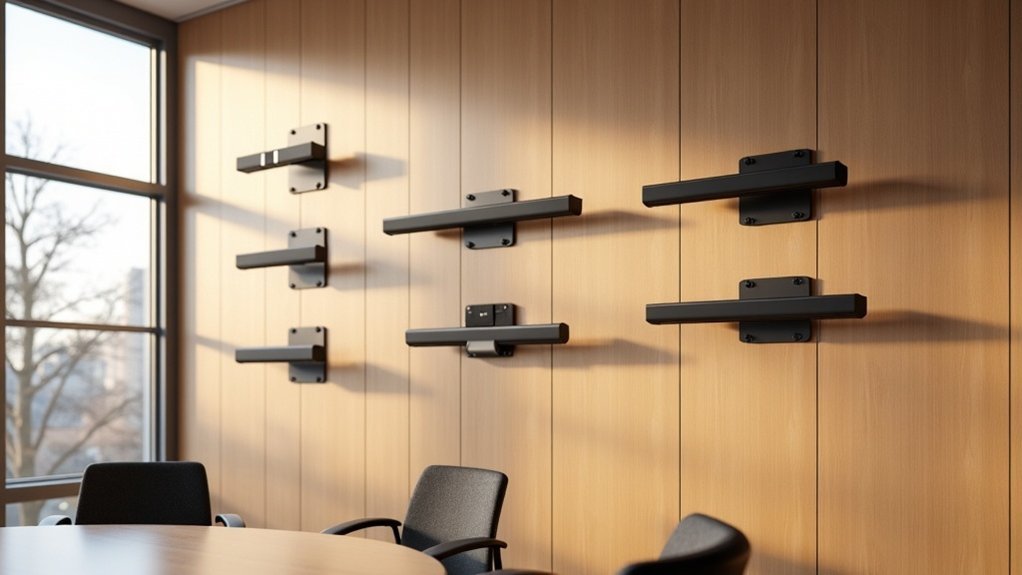
Install a mantle or floating metal shelf at least 12 inches above the fireplace to shield your soundbar from harmful heat exposure. Use a lightweight metal heat shield to deflect heat while keeping a sleek design.
Ascertain proper ventilation by drilling holes in the back of the shelf to prevent heat build-up. Additionally, incorporate insulation between the mantle and soundbar to reduce heat transmission.
Finally, regularly monitor the temperature levels around your soundbar to prevent overheating and maintain optimal performance.
Choosing the Right Materials
When selecting materials for protecting your soundbar, prioritize options that provide both durability and heat resistance.
Metals such as 24-gauge steel or certain types of wood can effectively endure high temperatures, ensuring your soundbar stays safe.
Furthermore, integrating heat-resistant insulation materials will further reduce heat transmission and enhance overall protection for your soundbar.
Ideal Material Options
Selecting the right materials for your soundbar’s protective mantle is essential for ensuring both heat resistance and durability.
Metal, particularly 24-gauge steel, is an excellent choice since it can withstand high temperatures without warping or discoloring. High-quality wood can also be used, but it should be treated to resist heat and moisture damage.
To enhance the protection of your soundbar, consider incorporating insulation materials like ceramic-based thermal barriers between the mantle and the soundbar itself.
Customizable mantle kits offer a variety of finishes, allowing you to combine functional heat protection with aesthetic appeal, ensuring your soundbar receives the care it needs while seamlessly fitting into your decor.
Durability and Heat Resistance
Choosing materials with excellent durability and heat resistance is essential for protecting your soundbar, especially if it’s situated near a fireplace.
Opt for metals or heat-treated woods that can withstand temperatures exceeding 150°F, preventing warping or damage to the soundbar. Durable materials like 24-gauge steel are ideal for components exposed to high heat, ensuring they maintain structural integrity and performance.
Additionally, consider incorporating heat shields or barriers made from fire-resistant materials for extra protection against heat exposure.
Installation Tips for Optimal Ventilation
How can you guarantee your soundbar remains safe from heat while delivering peak performance? The best approach is to position your soundbar at least 12 inches above any heat source, such as a fireplace, to minimize heat exposure.
Drill ventilation holes in the back of the shelf or mount to promote airflow, preventing heat build-up. Incorporate insulation between the mount and soundbar to effectively reduce heat transmission.
Avoid recessing the soundbar too deeply, as this can obstruct sound quality and trap heat. Finally, regularly monitor the temperature around your soundbar during operation to ensure it stays within safe limits, avoiding potential damage and ensuring optimal audio performance.
Maintaining Sound Quality While Protecting Your Soundbar
While ensuring your soundbar is protected from heat, it’s equally important to maintain sound quality for an optimal listening experience.
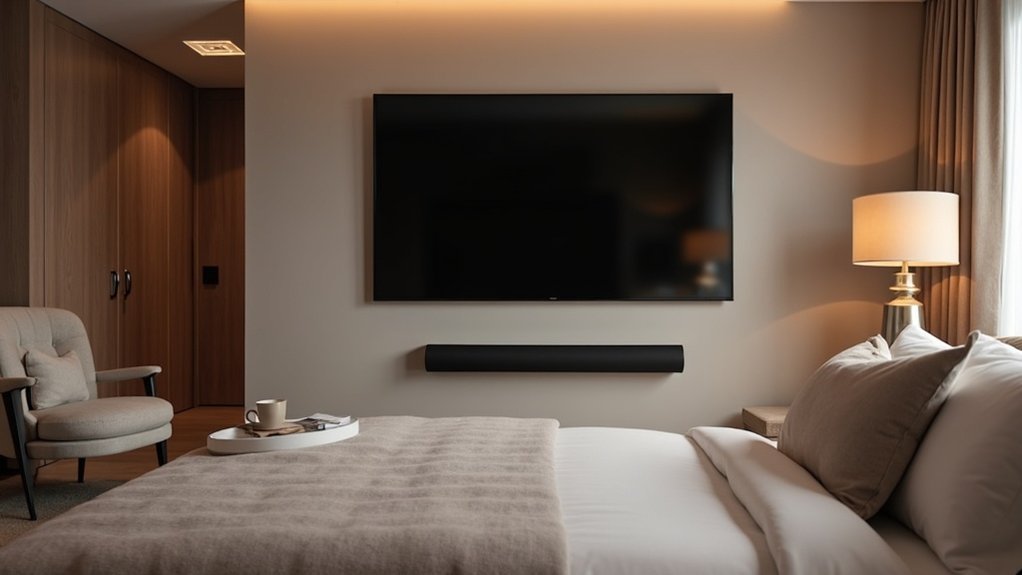
To enhance audio projection, position your soundbar at ear level and keep it free from obstructions. If you choose to recess the soundbar into your mantle for aesthetic reasons, make sure the recess isn’t too deep to avoid distortion.
Use fabric or grille materials that allow sound to pass through without interference. Adequate ventilation is crucial; consider drilling holes or using insulation to ensure proper airflow.
Finally, before finalizing your setup, test your soundbar placement to identify any sound cutoff issues and ensure it delivers clear and balanced audio for your enjoyment.
User Experiences and Success Stories
Many users have successfully integrated soundbars into their home setups while implementing effective heat shield solutions.
Techniques such as recessing soundbars into mantles or drilling ventilation holes have proven to significantly enhance both heat dissipation and sound quality.
Let’s explore these user experiences and discover how they achieved optimal soundbar performance.
Effective Heat Shield Solutions
When considering effective heat shield solutions for soundbars, users have reported notable success with various methods that mitigate heat exposure.
Installing metal heat shields above soundbars effectively deflects heat from fireplaces, protecting your electronics. Many recommend positioning soundbars at least 12 inches above the fireplace to enhance sound quality while reducing heat exposure.
Custom frames that integrate soundbars into mantles offer both aesthetic appeal and heat protection. Additionally, incorporating ventilation holes in shelves promotes airflow, minimizing overheating risks.
Success stories also highlight using insulated materials between the soundbar and mantle to further reduce heat transmission while ensuring accessibility for adjustments.
Successful Soundbar Integration Techniques
As you explore successful soundbar integration techniques, user experiences reveal innovative methods that not only elevate aesthetics but also optimize sound quality. Many homeowners advocate for recessed installations, utilizing grille cloth to discreetly cover cutouts in mantles, while trim pieces effectively conceal rough edges. Ensuring adequate ventilation is crucial; drilling holes in shelves guarantees airflow, preventing overheating. Some users have even added insulation between the mantle and soundbar for improved heat reduction. Positioning the soundbar at ear level significantly enhances audio clarity in your living room.
| Technique | Benefits | User Tips |
|---|---|---|
| Recessed Install | Seamless look, optimized sound | Use grille cloth for cover |
| Ventilation Holes | Prevents overheating | Drill in shelf back |
| Ear Level Placement | Enhances audio experience | Avoid obstructions |
Related Home Improvement Topics
While protecting your soundbar from heat is essential, it’s also important to explore additional home improvement topics that can enhance your audio-visual experience.
Proper positioning above a gas fireplace is crucial; it’s recommended to keep it at least 12 inches away. Installing a mantle or heat shield can help dissipate heat effectively.
Don’t overlook ventilation; drilling holes in your soundbar shelf can promote airflow, preventing overheating. Custom designs, such as recessing the soundbar, can improve aesthetics while managing heat and optimizing sound quality.
Lastly, consistently monitor temperature levels around your soundbar in high-heat areas—your equipment’s longevity is paramount for maintaining peak performance.