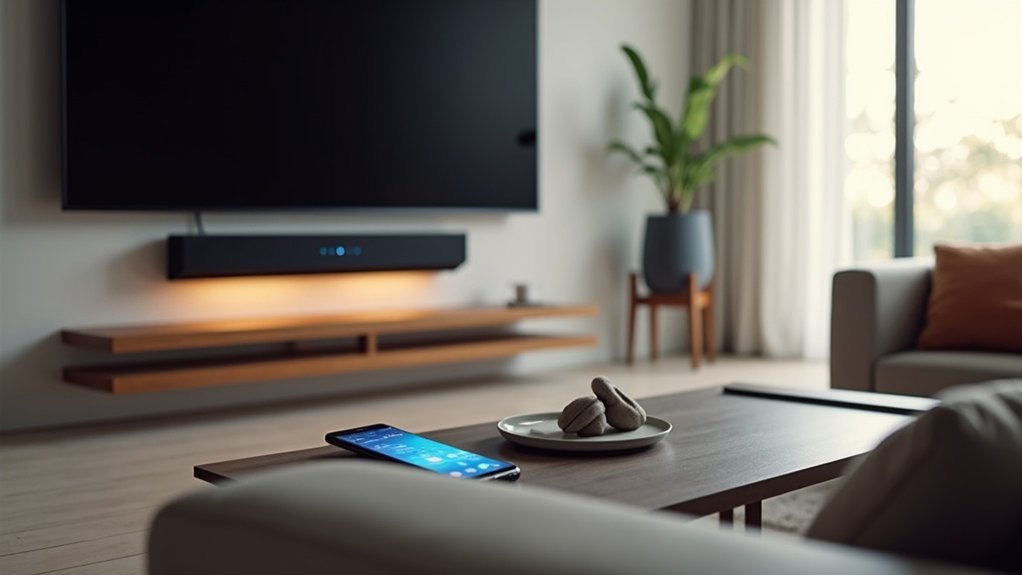
To integrate your soundbar with SmartThings, ensure that your soundbar is compatible and that your mobile device runs Android 8.0 or higher or iOS 12.0 or higher. Additionally, both the soundbar and your mobile device must be connected to the same Wi-Fi network. Open the SmartThings app and either follow the automatic prompts or manually add your soundbar from the device list. Make sure both devices are updated and powered on for optimal connectivity. Follow the steps provided for a smooth integration process, allowing you to enhance your audio experience seamlessly with your smart home setup.
Key Takeaways
- Ensure your mobile device runs Android 8.0 or higher or iOS 12.0 or higher and is connected to the same Wi-Fi network as your soundbar.
- Download and install the SmartThings app, then log in with your Samsung account on both your mobile device and the soundbar.
- Power on your soundbar and open the SmartThings app to detect and add the soundbar automatically.
- If automatic detection fails, you can manually add the soundbar by selecting “Device” and navigating to “AV” within the SmartThings app.
- Follow the on-screen prompts to confirm the location, Wi-Fi connection, and complete the registration process for your soundbar.
Requirements for Connection
To successfully connect your Samsung Soundbar to SmartThings, you first need to verify your mobile device meets specific requirements.
Confirm your device runs Android 8.0 or higher or iOS 12.0 or higher. Both your mobile device and Soundbar must be connected to the same Wi-Fi network for integration.
Download and install the SmartThings app from your app store, and make sure you’re logged into your Samsung Account on both devices.
If you encounter connectivity issues, check for software updates available on the Soundbar.
Meeting these requirements will streamline the connection process and enhance your overall experience with your soundbar.
Automatic Connection Method
To automatically connect your Samsung Soundbar, ensure it’s powered on and within your mobile device’s range while both are connected to the same Wi-Fi network.
Open the SmartThings app, where you’ll see a prompt to add the soundbar, facilitating a seamless setup.
Should you encounter any issues during this process, we’ll provide troubleshooting steps to assist you in resolving them.
Requirements for Automatic Detection
For successful automatic detection of your Samsung Soundbar, ensure that both the soundbar and your mobile device are connected to the same Wi-Fi network.
Your mobile device should be running Android 8.0 or higher or iOS 12.0 or higher to support the SmartThings app. Download and install the SmartThings app from your app store, and create a Samsung Account on both devices.
Once the app is activated, it will automatically detect the powered-on Samsung Soundbar nearby. Follow the on-screen prompts to select the location and room, completing the registration process for seamless integration with your SmartThings ecosystem.
Step-by-Step Connection Process
With your Samsung Soundbar powered on and connected to the same Wi-Fi network as your mobile device, you’re ready to start the automatic connection process through the SmartThings app.
Launch the app and wait for a pop-up; tap “Add Now” to let it detect a nearby soundbar. Follow the on-screen instructions by tapping “Start” and select your preferred Location and Room during the registration process.
Once the app detects your soundbar, it will automatically complete the registration. Afterward, you can easily control the soundbar through SmartThings, enhancing your home entertainment experience seamlessly.
Enjoy the rich audio quality and immersive soundscapes that soundbars provide, elevating your viewing and listening experience to new heights.
Troubleshooting Automatic Registration Issues
Are you having difficulty connecting your Samsung Soundbar through the SmartThings app?
To start, ensure that both your mobile device and Soundbar are connected to the same Wi-Fi network, as this is essential for automatic detection. Additionally, make sure the SmartThings app is updated to its latest version to avoid any compatibility issues.
Confirm that your Soundbar is powered on and set to Wi-Fi mode by pressing the Source button on the remote control.
If the registration pop-up isn’t appearing, try moving your mobile device closer to the Soundbar. Restarting both the Soundbar and your mobile device can also help resolve any automatic detection issues.
Manual Connection Method
To manually connect your Samsung Soundbar to the SmartThings app, follow these step-by-step instructions for a seamless setup.
If you encounter any issues during the process, troubleshooting tips will help you resolve connection problems effectively.
Let’s break down the manual connection method to ensure your soundbar integrates smoothly with your smart home system, enhancing your audio experience.
Step-by-Step Instructions
Integrating your soundbar with SmartThings requires a few simple steps that guarantee a seamless connection. Start by opening the SmartThings app on your mobile device. Tap the plus icon, select “Device,” then “By Device Type,” followed by “AV.” Choose “Samsung” and tap “Soundbar” to begin the registration. Follow the on-screen prompts to select a location, like your living room, and confirm both your mobile device and soundbar are on the same Wi-Fi network. Here’s a quick reference table to assist you:
| Step | Action |
|---|---|
| 1. Open SmartThings app | Tap the plus icon |
| 2. Select Device | Choose By Device Type > AV |
| 3. Choose Brand | Select Samsung |
| 4. Complete Registration | Follow on-screen prompts |
This guide is designed specifically for soundbar integration.
Troubleshooting Connection Issues
If you encounter issues connecting your Samsung Soundbar to SmartThings, several troubleshooting steps can help resolve the problem efficiently.
First, verify that both your soundbar and mobile device are connected to the same Wi-Fi network. Check that the SmartThings app is updated to the latest version, as older versions may cause connection problems.
Restart both the soundbar and your mobile device to refresh their connections. Additionally, confirm that the soundbar is set to Wi-Fi mode using the remote or soundbar controls.
If issues persist, ensure that the soundbar’s firmware is up to date, as outdated software can impact connectivity.
Troubleshooting Connection Issues
When encountering connection issues with your Samsung Soundbar and the SmartThings app, it’s essential to confirm both devices are on the same Wi-Fi network, as this forms the foundation for successful integration.
To troubleshoot connection issues effectively, consider the following steps:
- Check if the Soundbar’s firmware is up to date; outdated software can impede functionality.
- Restart both the Soundbar and your mobile device to refresh connections.
- Confirm the SmartThings app is updated to the latest version for better compatibility.
- If needed, manually register your device in the SmartThings app to help detect your Samsung Soundbar properly.
For the best performance and compatibility, ensure your soundbar is always updated and properly configured within your home network.
Frequently Asked Questions
Ever wondered how to enhance your experience with soundbars, specifically the Samsung Soundbar and its integration with SmartThings?
To get started, ensure both your Samsung Soundbar and SmartThings app are connected to the same Wi-Fi network.
Ensure your Samsung Soundbar and SmartThings app are on the same Wi-Fi network to begin the integration process.
First, install the SmartThings app on your mobile device. You can easily add your Samsung Soundbar by opening the app and tapping “Add Now” when prompted.
If that doesn’t work, you can manually add it by tapping the plus icon, selecting “Device,” and then choosing “AV.”
Remember to log into your Samsung Account on both your mobile device and the Soundbar.
If you run into any issues, it’s a good idea to check for software updates and verify your Wi-Fi connection to troubleshoot any connection problems effectively.
Integration Steps for Home Assistant
To successfully integrate your Samsung Soundbar with Home Assistant, you’ll first need to install HACS (Home Assistant Community Store) and add the SmartThings API repository as a custom repository.
Then, follow these steps:
- Obtain the API key and device ID specific to your soundbar.
- Modify the `configuration.yaml` file by adding the media player platform configuration with your soundbar’s API key and device ID.
- Save changes to the `configuration.yaml` file.
- Restart the Home Assistant server to apply the new configurations.
If you have multiple soundbars, repeat the media player configuration for each, ensuring that each soundbar has a unique device ID.
This guide will help you seamlessly integrate your soundbars with Home Assistant for an enhanced audio experience.
Dashboard Setup for Soundbar Control
Having successfully integrated your Samsung Soundbar with Home Assistant, the next step involves creating an effective dashboard for streamlined control. Start by using the default dashboard or create a new one to enhance the visibility of your soundbar devices. Add a media card specifically for the Soundbar, ensuring it functions correctly. Each Soundbar should have a unique name and device ID for individual control. Regularly review your dashboard setup to confirm that all connected soundbars, including the Samsung models, are displayed and functioning as expected.
| Device Name | Control Type |
|---|---|
| Soundbar 1 | Volume Control |
| Soundbar 2 | Playback Control |
| Soundbar 3 | Source Selection |
Multiple Device Integration Options
Integrating multiple soundbars can greatly enhance your home audio experience.
You’ll want to configure each soundbar in the `configuration.yaml` file, ensuring they each have a unique `device_id`.
To ensure seamless integration, configure each soundbar in the `configuration.yaml` file with a unique `device_id`.
Follow this structure for seamless integration:
- Use the correct `api_key` for each soundbar.
- Assign a distinct `name` for easy identification.
- Set `max_volume` for individual control.
- Restart your Home Assistant server after changes.
This website is dedicated to soundbars, providing all the information you need for optimal integration and setup.