To install a soundbar in a cabinet, ensure there is at least 3 inches of clearance around it for ventilation. Choosing an open shelf-style cabinet can enhance airflow and prevent muffling of sound. It’s important to plan for effective cable management and ensure that remote signals can easily reach the soundbar; use extenders if necessary. Experiment with different placements to find the ideal sound clarity, and consider incorporating a subwoofer for richer bass. Continue to explore tips for maintenance and sound quality enhancements to maximize your audio experience with your soundbar.
Key Takeaways
- Ensure at least 3 inches of clearance around the soundbar for proper ventilation and to prevent overheating.
- Choose an open shelf-style cabinet to enhance airflow and reduce sound muffling, maximizing the soundbar’s performance.
- Plan for effective cable management by incorporating accessible openings for HDMI, optical, or power cables for a tidy setup.
- Confirm that remote control signals can easily reach the soundbar; consider using remote extenders if necessary for seamless operation.
- Test different placements within the cabinet to optimize audio clarity and sound performance, ensuring you get the best experience from your soundbar.
Pros and Cons of Placing a Soundbar in a Cabinet
When considering the placement of a soundbar in a cabinet, it’s crucial to evaluate both the aesthetic advantages and potential challenges.
While concealing the soundbar can provide a tidier appearance, sound quality may be compromised due to muffled audio and reduced clarity in an enclosed environment.
Concealing the soundbar may create a neat look, but it can lead to muffled audio and diminished clarity.
Furthermore, insufficient ventilation can lead to overheating, risking damage to the device over time. Remote control signals may also have difficulty reaching the soundbar, resulting in operational issues.
To optimize sound quality and minimize these concerns, ensure there’s at least 3 inches of clearance around the soundbar and explore open-shelf designs for enhanced airflow.
How to Make a Cabinet Work for a Soundbar
To make a cabinet work effectively for your soundbar, ensure it’s designed to accommodate both the device’s acoustics and necessary connections.
Make sure there’s at least 3 inches of clearance around the soundbar to promote ventilation and prevent overheating.
Opt for an open shelf-style cabinet to enhance airflow and minimize sound quality degradation.
Confirm that there’s enough space for HDMI, optical, or power cables to avoid accessibility issues.
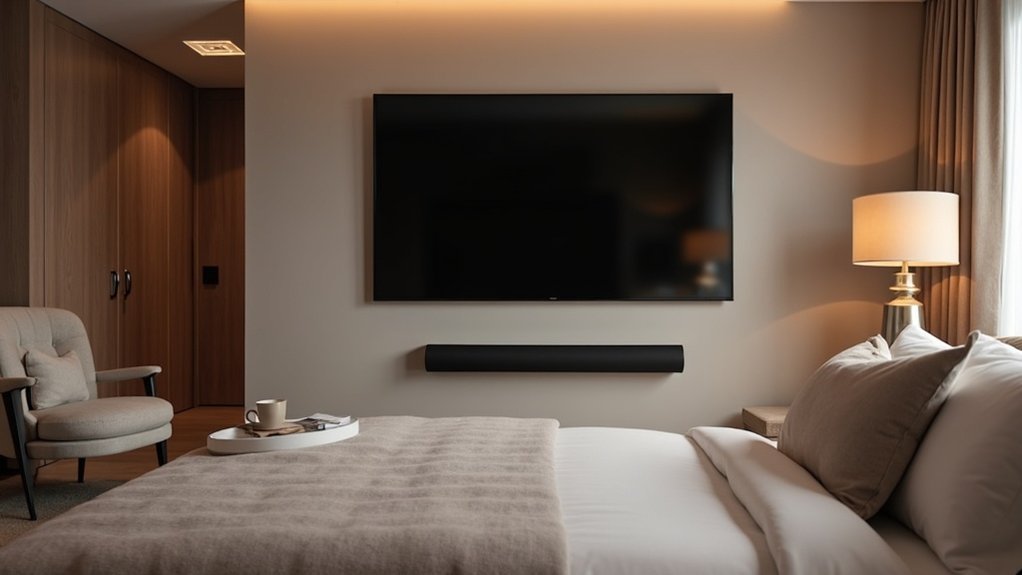
Consider floating entertainment stands for a stylish, practical installation.
Additionally, evaluate alternative placements, like mounting the soundbar above or below the TV, to achieve the best audio performance possible.
Installation Considerations
Before you dive into installing your soundbar, it’s essential to consider several key factors that can significantly influence its performance and enhance your overall home theater setup.
Keep these points in mind for an optimal sound experience:
- Ensure there’s at least 3 inches of clearance around the soundbar to avoid overheating.
- Plan for effective cable management, providing accessible openings for power and audio connections.
- Confirm that remote signals can reach the soundbar; if doors are closed, consider using remote extenders.
- Verify compatibility with your existing TV setup to ensure seamless connections.
Sound Quality Enhancements
Achieving ideal sound quality from your soundbar requires careful attention to its setup and features. Position your soundbar with at least 3 inches of clearance around it to prevent sound muffling, ensuring excellent dispersion.
Utilizing Bluetooth connectivity enhances versatility, allowing playback from various devices without compromising audio integrity. Consider adding a subwoofer, like the Paradigm Seismic-110, to enrich your experience with deeper bass and balanced audio.
Testing different placements during setup is essential; reflections and obstructions can significantly impact audio clarity. By fine-tuning these elements, you’ll create an engaging sound environment that transforms your viewing experience with your soundbar.
Maintenance and Care
While it might be easy to overlook, regular maintenance and care of your soundbar are vital for preserving its performance and longevity.
Here are some key tasks to keep in mind for optimal soundbar upkeep:
- Regularly check the stability of the mounting bracket to prevent any potential damage.
- Use a soft, dry cloth to clean the soundbar, helping to avoid dust buildup that can affect sound quality.
- Ensure proper ventilation around the soundbar to prevent overheating, which can impair performance.
- Organize and inspect cables to prevent tangling and potential damage, ensuring a tidy setup for your audio experience.