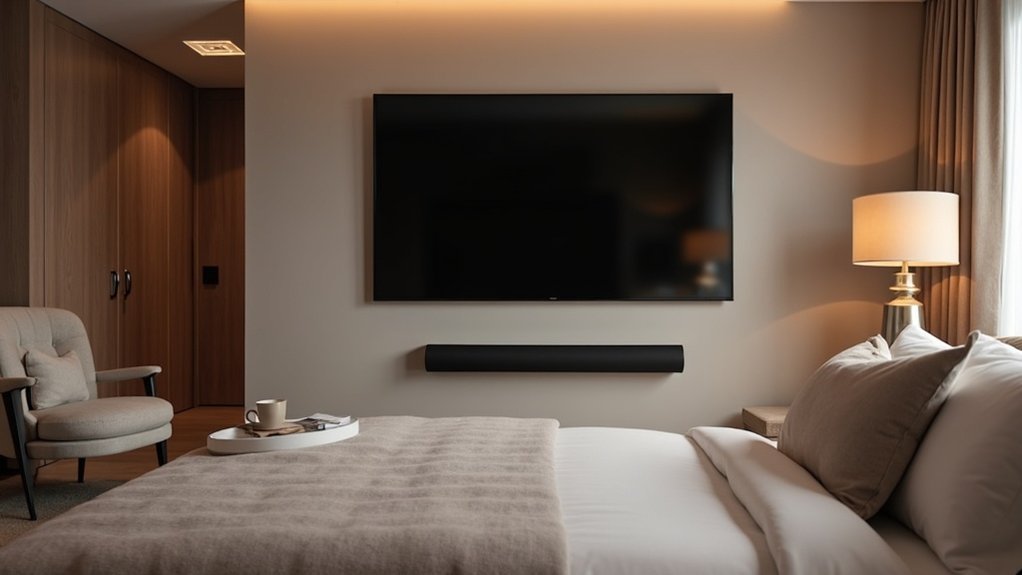
To fix your soundbar’s eARC issues, start by checking the compatibility of your HDMI cables and ensure both the soundbar and TV are connected to the designated ARC or eARC ports. Power cycling both devices can help enhance connection stability. Adjust the audio settings on your TV by enabling HDMI CEC and setting the Digital Sound Output to Auto or PCM. If problems persist, try testing with different source devices or consult a technician for detailed diagnostics. Keep exploring our site for more soundbar troubleshooting tips and solutions.
Key Takeaways
- Ensure your HDMI cable is high-speed and rated for eARC, and check for any visible damage.
- Verify that both the TV and soundbar are connected to the correct HDMI ARC/eARC ports labeled accordingly for optimal performance.
- Power cycle your devices by unplugging them for about five minutes to refresh the connection and resolve any potential issues.
- Enable HDMI CEC settings on your TV and set the Digital Sound Output to Auto or PCM for improved compatibility with your soundbar.
- Update the firmware for both the TV and soundbar, as outdated software can lead to compatibility challenges and hinder sound quality.
Understanding Earc and Its Benefits
When upgrading your soundbar, understanding eARC (Enhanced Audio Return Channel) is essential.
eARC offers significant benefits over standard ARC by enabling higher bandwidth audio transmission, which supports advanced formats like Dolby Atmos and DTS:X. This means you’ll enjoy clearer, more dynamic sound without compression artifacts often found in standard audio formats.
eARC simplifies connections by allowing audio to travel from your TV to your soundbar using a single HDMI cable, reducing clutter.
Additionally, it features automatic lip-sync correction, ensuring audio and video stay perfectly in sync for an immersive listening experience with your soundbar.
Common Earc Issues and Troubleshooting Steps
Though eARC technology promises enhanced audio experiences with soundbars, users often encounter issues that can disrupt performance. Common problems include no audio output, intermittent sound loss, and failure to switch audio sources. To troubleshoot, check if both your soundbar and TV support eARC and use an HDMI 2.1 compliant cable. Enable HDMI CEC settings for optimal functionality. Power cycling both devices and reseating your HDMI connections may also help. If problems persist, try different HDMI cables or update the firmware on your soundbar and TV.
| Issue | Possible Cause | Solution |
|---|---|---|
| No audio output | Incorrect settings | Check HDMI CEC and eARC support |
| Intermittent sound | Faulty HDMI cable | Replace with a high-speed HDMI cable |
| Audio source switch | CEC not enabled | Enable HDMI CEC on both devices |
| Compatibility issues | Outdated firmware | Update firmware on both the soundbar and TV |
Checking HDMI Cable and Port Compatibility
To ensure optimal performance of your soundbar with eARC, it’s essential to check both the HDMI cable and the ports you’re using.
First, make sure you have a high-speed HDMI cable that’s rated for eARC and supports HEAC.
Next, confirm that your TV and soundbar are connected to HDMI ARC inputs that are specifically labeled as “ARC” or “eARC.” Not all HDMI ports support these features, so double-check their compatibility.
Additionally, examine the HDMI cable for any damage, as a faulty cable can disrupt the audio signal.
If you’re connecting third-party devices, be sure they’re compatible with eARC to prevent any transmission issues.
Power Cycling Devices for Connection Stability
Power cycling your soundbar can significantly improve connection stability.
To do this, turn off the soundbar, unplug it for about five minutes, and then reconnect everything securely.
Regularly power cycling can help clear glitches and maintain peak performance, especially when you experience intermittent issues with your soundbar.
Importance of Power Cycling
When you encounter issues with your soundbar’s eARC connection, one effective solution is power cycling both the soundbar and the TV. This process resets any temporary glitches affecting their communication.
Here’s why power cycling is important for soundbars:
- Refreshes internal systems for better HDMI port connectivity, ensuring optimal audio performance.
- Resolves unexpected setting changes easily, allowing for a seamless listening experience.
- Restores normal functionality without extensive troubleshooting, making it user-friendly.
- Maintains stable connections in multi-device setups, enhancing your overall home theater experience.
Steps to Power Cycle
One effective method to resolve eARC issues with your soundbar involves power cycling both your soundbar and TV.
Start by turning off both devices and unplugging their power cords from the outlet. Allow about five minutes for the internal systems to reset and the capacitors to discharge fully.
After waiting, securely reconnect the power cords to a functioning outlet. Then, turn on your TV and soundbar, giving them time to fully boot up.
Once both devices are powered on, check the HDMI ARC/eARC settings to ensure they’re enabled correctly.
This power cycling process helps stabilize the connection, ultimately enhancing your audio experience with the soundbar.
Frequency of Power Cycling
Although power cycling is a straightforward solution to resolve eARC connectivity issues with soundbars, it’s important to know how often you should perform this procedure.
You may need to power cycle your soundbar and connected devices in the following situations:
- When the soundbar frequently loses HDMI ARC connectivity.
- After significant changes in your audio setup.
- Following firmware updates to guarantee peak functionality.
- To clear cache memory and resolve software conflicts.
Regular power cycling helps refresh the connection, reset HDMI ARC communication, and clear glitches, ensuring a stable audio experience with your soundbar.
Keep these points in mind to maintain optimal performance.
Adjusting Audio Settings on Your TV
To ensure your soundbar functions optimally with your TV, begin by enabling HDMI CEC settings in the audio section of your TV’s menu.
Then, adjust the Digital Sound Output to the appropriate format, such as Auto or PCM, to enhance compatibility.
These settings are crucial for achieving the best audio experience through HDMI ARC/eARC with your soundbar.
Enable HDMI CEC Settings
Enabling HDMI CEC settings is essential for ensuring your soundbar and TV work together seamlessly. This feature allows your devices to communicate effectively, enhancing your audio experience.
To enable CEC for your soundbar, follow these steps:
- Navigate to your TV’s main settings menu.
- Look for CEC, which may be labeled differently (e.g., Anynet+ for Samsung, Bravia Sync for Sony).
- Enable CEC on all connected devices to ensure maximum compatibility with your soundbar.
- Restart your TV to apply changes and confirm the soundbar as the primary audio output.
Finally, verify that your TV’s audio settings are set to HDMI ARC/eARC to achieve peak sound transmission through your soundbar.
Set Digital Sound Output
After confirming your HDMI CEC settings are properly configured, the next step is to adjust the Digital Sound Output on your TV to ensure optimal compatibility with your soundbar.
Navigate to the audio settings menu and select “Digital Sound Out.” For ideal performance, set it to either “Auto” or “Pass Through.” If you encounter any audio issues, try switching the Digital Sound Output to “PCM” to diagnose compatibility problems.
Additionally, make sure to activate the HDMI ARC/eARC feature in your TV settings for seamless connectivity with your soundbar.
Finally, consult your user manual for specific names of settings related to soundbars, and restart your TV to confirm that the adjustments take effect properly.
Enabling HDMI CEC for Better Communication
When you activate HDMI CEC (Consumer Electronics Control) on your devices, you enable the ability for them to communicate seamlessly, enhancing your overall soundbar experience.
To ensure your soundbar works efficiently, follow these steps:
- Access your TV’s settings menu to enable HDMI CEC (look for brands like Anynet+ or Bravia Sync).
- Activate HDMI CEC on all connected devices, including your soundbar.
- Restart both the TV and soundbar for the settings to take effect.
- Connect your soundbar to the correct HDMI port that supports CEC functionality.
This integration streamlines control and improves audio quality across your devices, giving you a superior sound experience.
Testing With Different Source Devices
How can testing with different source devices help you pinpoint the issue with your soundbar? By connecting devices like a gaming console or streaming box, you can determine whether the problem lies with the soundbar or the settings of the original device.
Make sure all HDMI cables are securely connected and check if the new device supports HDMI ARC or eARC functionality. If the soundbar works with one device but not another, it may indicate compatibility issues or incorrect audio settings.
Additionally, ensure that HDMI CEC is enabled on the new device, and consider using a certified high-speed HDMI cable during testing to eliminate potential connection problems.
Seeking Professional Help for Persistent Issues
If your soundbar’s eARC connection issues persist despite your best troubleshooting efforts, it may be time to seek professional help. Consulting an audio-visual technician can provide the expertise needed to effectively resolve the issue.
Consider the following:
- Advanced signal testing to identify connectivity faults specific to soundbars
- Equipment inspections for underlying hardware problems affecting sound quality
- Manufacturer support for tailored assistance based on your soundbar model
- Complex wiring evaluations that exceed basic troubleshooting knowledge
Professional support can save you time and frustration, ensuring your soundbar functions efficiently.
Don’t hesitate to reach out for help if you’re stuck—sometimes, expert guidance is the best solution for your soundbar issues.