To enable Dolby Atmos on your soundbar, connect it to a compatible TV using HDMI ARC or eARC. Next, access your TV’s sound settings and set the Digital Output Audio Format to Dolby Digital or Auto. Ensure that your soundbar supports Dolby Atmos technology and check for any firmware updates to enhance performance. Finally, test your setup with Atmos-compatible content from streaming services for an immersive audio experience. There’s more to explore to optimize your soundbar’s performance further.
Key Takeaways
- Connect your soundbar to your TV using HDMI ARC or eARC to ensure optimal support for Dolby Atmos.
- Navigate to your TV settings and adjust the Digital Output Audio Format to Dolby Digital or Auto.
- Confirm that both your soundbar and TV are equipped with Dolby Atmos technology.
- Activate Dolby Atmos in the sound settings when using compatible streaming content.
- Test your setup by playing Dolby Atmos-specific movies on popular streaming services like Netflix or Disney+.
Setting Up Your Soundbar for Dolby Atmos
To enable Dolby Atmos on your soundbar, ensure it’s set up for optimal performance.
First, connect your Samsung soundbar to your TV using HDMI ARC or eARC for the best audio transmission.
Connect your Samsung soundbar to your TV via HDMI ARC or eARC for optimal audio performance.
Then, access your TV’s settings, go to Sound, and make sure the Digital Output Audio Format is set to Dolby Digital or Auto.
Check that both your soundbar and TV support Dolby Atmos by reviewing their specifications and updating the firmware if needed.
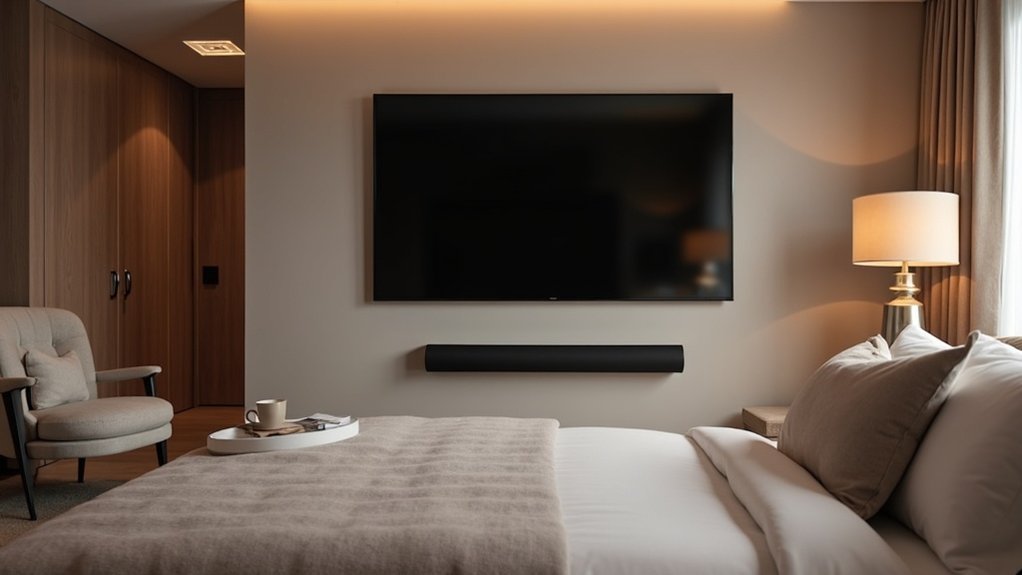
Position the soundbar at ear level for the best sound experience, and test its capabilities by streaming Dolby Atmos content from platforms like Netflix or Disney+ to fully enjoy the immersive audio experience.
Requirements for Dolby Atmos Playback
Achieving Dolby Atmos playback with a soundbar requires specific equipment and configurations to fully leverage its immersive audio capabilities.
First, ensure your soundbar supports Dolby Atmos technology. Connect it to a compatible TV using HDMI ARC or eARC output to facilitate Dolby Atmos audio signals.
Additionally, you’ll need a subscription to a streaming service like Netflix or Disney+ that offers Dolby Atmos content. Make sure that any external devices, such as Blu-ray players or gaming consoles, also support Dolby Atmos and are set to output audio in bitstream format.
Regularly check for firmware updates for your soundbar to maintain compatibility with the latest Dolby Atmos features.
Configuring Audio Settings on Your TV and Soundbar
Once you’ve connected your soundbar to your TV via HDMI ARC or eARC, it’s essential to configure the audio settings to enable Dolby Atmos.
After connecting your soundbar via HDMI ARC or eARC, configure the audio settings to activate Dolby Atmos for an enhanced experience.
Follow these steps to ensure your soundbar delivers the best audio experience:
- Navigate to your TV’s Settings menu.
- Select Sound and access Expert Settings.
- Set the Digital Output Audio Format to Dolby Digital or Auto.
- Ensure that Dolby Atmos is activated in your sound settings for compatible content.
If you’re using external devices connected to your soundbar, configure their sound settings to output bitstream audio.
Additionally, regularly check for firmware updates for both your soundbar and TV to optimize performance and compatibility with Dolby Atmos content.
Testing and Confirming Dolby Atmos Functionality
When you’re ready to ensure that your soundbar is providing the complete Dolby Atmos experience, start by looking for visual indicators on the device itself. Check for a white light or flash that signifies Dolby Atmos content playback. You can also utilize the soundbar’s companion app or the on-device display for further confirmation. Test with Dolby Atmos-specific movies or shows on streaming platforms like Netflix or Disney+. If you encounter any issues, restarting both the soundbar and TV can help reset connections. Always consult the user manual for detailed instructions on checking audio format indicators.
| Indicator Type | Status | Action Needed |
|---|---|---|
| Dolby Atmos Light | On | All good |
| Dolby Atmos Light | Off | Check content |
| App Notification | Active | Confirm playback |
| App Notification | Inactive | Restart devices |
Troubleshooting Common Dolby Atmos Issues
Experiencing issues with your soundbar’s Dolby Atmos functionality can be frustrating, especially after ensuring that it’s set up correctly.
Troubleshooting Dolby Atmos issues with your soundbar can be challenging, particularly after confirming its proper setup.
To troubleshoot, follow these steps:
- Verify that both your TV and soundbar support Dolby Atmos and that they’re connected via HDMI ARC or eARC.
- Check the sound settings on your TV; they should be configured to output Dolby Digital or set to Auto, while ensuring the soundbar is on the correct input source.
- Look for a white indicator light on your soundbar, which confirms that Dolby Atmos content is currently playing.
- Test with popular streaming services like Netflix or Disney+ to rule out any content-related issues.
If problems persist, consider restarting both your TV and soundbar, as this may resolve any connection issues.