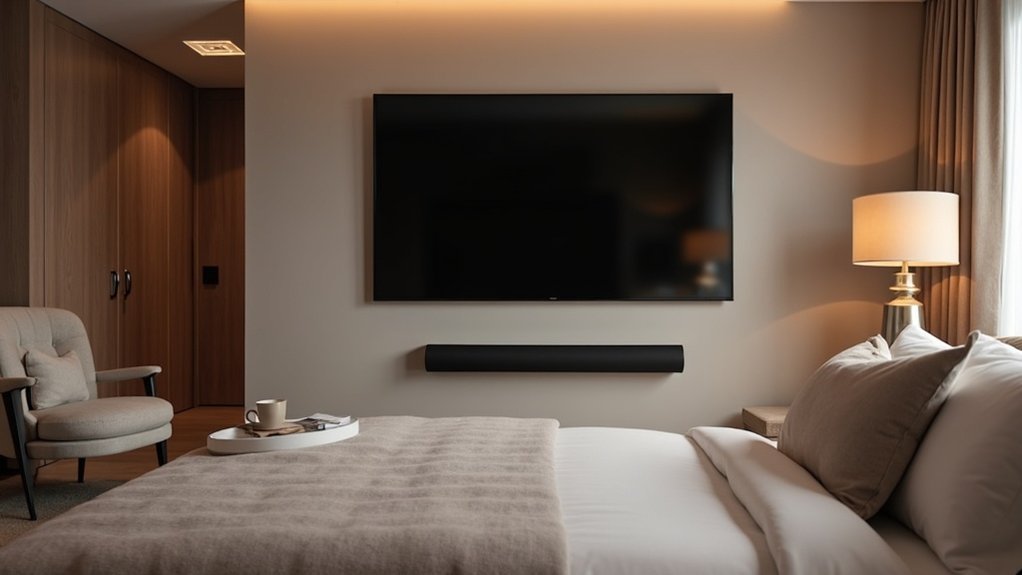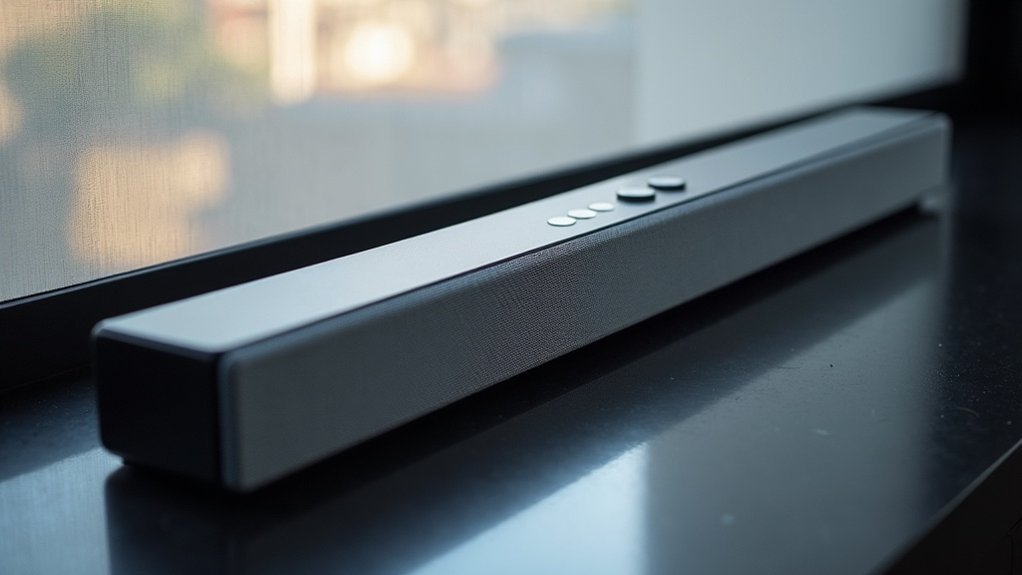
Yes, you can place a soundbar behind an acoustically transparent screen. This setup enhances audio clarity while seamlessly integrating into your home theater environment. It’s important to position the soundbar at ear level, ideally 30-50 cm behind perforated screens, to minimize distortion and optimize sound quality. However, keep in mind that compatibility with Dolby Atmos and specific sound configurations may vary, so testing and calibration are essential. Additionally, exploring the intricacies of screen materials and placement can further improve performance.
Key Takeaways
- Yes, a soundbar can sit behind an acoustically transparent screen, allowing sound waves to pass through with minimal distortion.
- For optimal audio performance, position the soundbar 30-50 cm (12-20 inches) behind perforated screens.
- Woven screens are recommended for better acoustic quality and higher frequency sound transmission.
- Ensure the soundbar is at ear height, typically within 5 feet, for improved listening clarity.
- Regular calibration and experimentation with placements can enhance audio performance and integration with the screen.
Understanding Acoustically Transparent Screens
When you’re considering placing a soundbar behind a screen, understanding acoustically transparent (AT) screens is essential for optimizing your audio experience.
These screens allow sound to pass through with minimal distortion, making them ideal for integrating soundbars behind the screen. Typically made from perforated or woven materials, AT screens help maintain both audio quality and image integrity.
Perforated screens feature tiny holes, while woven screens consist of interlaced fibers that enhance sound transmission and minimize high-frequency loss.
For best performance with your soundbar, position it approximately 30-50 cm (12-20 inches) behind a perforated screen, or closer with a woven screen, to achieve superior clarity and enhance your overall sound system.
Benefits of Placing a Soundbar Behind the Screen
Placing a soundbar behind an acoustically transparent screen offers enhanced audio clarity by allowing sound waves to pass through with minimal distortion.
This setup not only saves space but also integrates seamlessly into your home theater’s aesthetic, providing a cleaner look.
Additionally, positioning the soundbar at ear level improves the overall listening experience, aligning audio sources more naturally with the visuals.
For optimal sound quality and an immersive experience, consider installing your soundbar in this location.
Enhanced Audio Clarity
By placing a soundbar behind an acoustically transparent screen, you can significantly improve audio clarity during playback.
The design of the screen allows sound waves from the soundbar to pass through with minimal distortion, ensuring that audio and visuals remain in sync. This arrangement optimizes the soundstage by positioning the soundbar at ear level, which enhances dialogue intelligibility.
Acoustically transparent screens, whether they’re woven or perforated, enable effective sound dispersion while maintaining high image quality. Users often experience improved bass response and overall audio fidelity, as this setup reduces reflections and promotes direct sound delivery, resulting in a more immersive viewing experience.
Space-Saving Design
Though many homeowners prioritize aesthetics in their living spaces, a soundbar positioned behind an acoustically transparent screen offers a practical solution that saves space without sacrificing audio quality.
This design allows for ideal speaker placement at ear level, enhancing sound immersion in your home theater. With transparent projector screens, sound waves pass through without distortion, ensuring clear audio delivery from your soundbar.
Additionally, this setup eliminates the need for bulky speaker stands or mounts, streamlining installation and reducing clutter. By maintaining audio quality while maximizing limited wall or floor space, you achieve both functionality and elegance in your entertainment environment, all centered around your soundbar.
Improved Aesthetic Integration
Integrating a soundbar behind an acoustically transparent screen enhances the visual appeal of your home theater setup.
This arrangement not only conceals the soundbar but also contributes to a sleek and modern aesthetic.
Here are three significant advantages:
- Unobstructed View: This setup eliminates the need for visible mounts or stands, preserving a contemporary look.
- Enhanced Cohesion: The soundbar blends seamlessly with your decor, ensuring a more harmonious design throughout the space.
- Optimal Sound Directionality: With acoustically transparent screens, you can enjoy clear audio while positioning the soundbar at ear level for an immersive listening experience.
Considerations for Soundbar Compatibility
When placing a soundbar behind a screen, it’s essential to assess how the screen’s material influences sound quality.
Certain woven screens provide better compatibility, allowing for minimal distortion, while others may negatively impact audio performance.
Experimenting with various placements can help you determine the best configuration for optimal sound delivery from your soundbar.
Sound Quality Impact
Positioning a soundbar behind an acoustically transparent (AT) screen can significantly impact audio quality, particularly in advanced setups like Dolby Atmos.
Here are three essential considerations for achieving optimal sound performance:
- Screen Material: Ensure that the AT screen effectively minimizes high-frequency attenuation, as some screens may reduce frequencies by as much as 10dB, which can affect the overall audio experience.
- Placement Height: Aim to position the soundbar at a height no greater than 5 feet for improved clarity and to prevent distortion in sound reproduction.
- Testing: Since users can have varied experiences, it’s crucial to test your specific soundbar setup to accurately assess sound quality and make necessary adjustments.
Screen Compatibility Issues
Achieving ideal sound quality with your soundbar involves more than just placement; screen compatibility plays a significant role in how well the soundbar performs behind an acoustically transparent screen. Consider the following factors when selecting your screen type:
| Screen Type | High-Frequency Attenuation | Best Soundbar Distance |
|---|---|---|
| Woven | Low | 1-2 inches |
| Perforated | High | Up to 6 inches |
| Acoustic Panels | Variable | Test for best results |
| Fixed Frame | Low | 1-2 inches |
| DIY Screens | Unpredictable | Test before finalizing |
Evaluate your soundbar setup to minimize sound distortion and ensure excellent audio performance.
Optimal Placement Height for Soundbars
To guarantee ideal audio performance from your soundbar, it’s essential to place it at the right height. Here are three key considerations:
For optimal audio performance, position your soundbar at ear height for enhanced clarity and dialogue delivery.
- Position the soundbar at ear height, typically within 5 feet, to enhance clarity and dialogue delivery.
- If mounting higher, angle the soundbar slightly downward to improve audio quality and minimize distortion.
- Consider your room’s acoustics; sound reflection can impact performance, so adjust placement based on your environment.
This website is dedicated to soundbars, providing tips and guidance for optimal setup and performance.
Acoustic Effects of Screen Material
When setting up a soundbar, the choice of screen material can significantly affect audio performance. Woven screens typically enhance acoustic quality, allowing higher frequencies to pass through with minimal attenuation, which results in clearer sound when positioning a soundbar behind them.
In contrast, if you’re using perforated screens, it’s advisable to maintain a distance of 12-20 inches between the soundbar and the screen to mitigate comb filtering effects.
Additionally, opting for screens with a gain between 0.8 and 1.3 strikes a balance between brightness and sound quality, ensuring optimal audio delivery while enriching your viewing experience.
Calibration for Enhanced Audio Performance
Calibrating your soundbar is essential for optimizing audio performance, especially when it’s positioned behind an acoustically transparent screen.
Here are three key steps to enhance sound quality:
- Utilize the auto EQ settings on your soundbar to balance frequencies, compensating for any acoustic challenges introduced by the screen.
- Regularly assess sound quality after installation to identify any discrepancies and make necessary adjustments to the calibration settings.
- Ensure that the soundbar’s frequency response is compatible with the acoustically transparent screen material to minimize distortion.
Proper calibration not only enhances audio clarity but also ensures a seamless integration of sound with your visual experience.
User Experiences and Recommendations
How do users really feel about placing soundbars behind acoustically transparent screens? Experiences vary, particularly with models like the Sonos Arc, where audio performance in Dolby Atmos setups can be compromised.
Many users recommend testing soundbars within existing configurations to evaluate compatibility and sound quality before making a purchase. Some report satisfactory results when screens minimize distortion; however, height placement is crucial—keeping soundbars below 5 feet significantly enhances audio clarity.
Community feedback encourages experimentation with angles and positions to optimize sound quality. While challenges exist, thoughtful arrangements can lead to satisfying audio experiences, even with soundbars positioned behind screens.