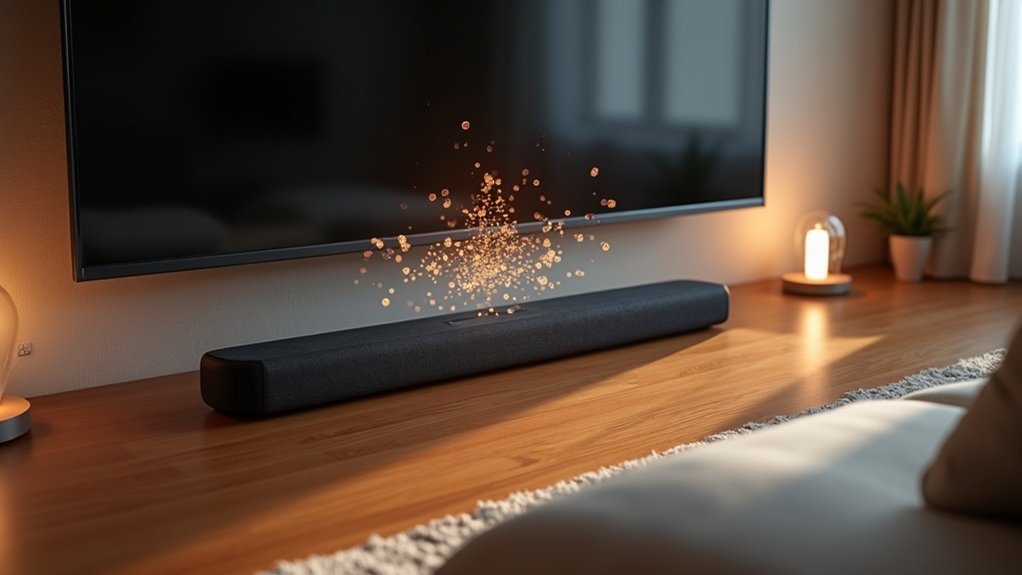
Yes, a soundbar can output audio to a hearing aid transmitter, typically through an optical connection, which is vital for ideal sound quality. Many soundbars also feature HDMI and AUX ports, but simultaneous connections may require a powered optical splitter. Compatibility between your soundbar and hearing aids is essential for effective audio delivery. To further enhance your soundbar experience, explore additional options and insights on refining your audio setup.
Key Takeaways
- Soundbars can output audio to hearing aid transmitters if they have an optical output connection.
- Many hearing aid transmitters require optical connections for optimal performance with soundbars.
- Using a powered optical splitter allows simultaneous audio output to both the soundbar and hearing aid transmitter.
- Compatibility between the soundbar and hearing aids must be verified for seamless operation.
- HDMI ARC connections may restrict simultaneous audio output, necessitating additional hardware like audio extractors.
Understanding Audio Output Options for Soundbars
When you’re choosing a soundbar, understanding its audio output options is essential, especially if you want to connect it to devices like hearing aid transmitters.
Soundbars typically offer HDMI, optical, or AUX connections, but usually only one can be used at a time. To link a hearing aid transmitter, ensure the soundbar has an available optical output.
Soundbars generally feature HDMI, optical, or AUX connections, but typically only one can be used simultaneously. Ensure optical output is available for hearing aid transmitters.
If you opt for this connection, a powered optical splitter may be necessary to effectively divide audio between the soundbar and the transmitter.
Look for soundbar models that provide multiple output options or Bluetooth support for enhanced flexibility in connecting hearing aid devices.
Importance of Compatibility With Hearing Aids
Choosing a soundbar that works seamlessly with hearing aids is essential for achieving an optimal audio experience. Compatibility ensures that your hearing aid can effectively receive audio output, especially since many transmitters require optical connections for peak performance.
Some soundbars offer the ability to output audio simultaneously to external devices, which helps maintain sound quality while delivering clear audio to your hearing aid. It’s crucial to verify that the hearing aid transmitter aligns with the soundbar’s audio output options, ensuring a smooth listening experience.
Connection Methods for Hearing Aid Transmitters
How can you ensure your soundbar connects effectively with your hearing aid transmitter?
Start by checking if your soundbar has an optical output, as most hearing aid transmitters require this for connection.
If your soundbar supports passthrough functionality, you can connect both the soundbar and the hearing aid transmitter simultaneously.
Alternatively, consider using a powered optical splitter to distribute audio to both devices at once.
You can also utilize a 3.5mm headphone jack if your soundbar has one.
Always verify compatibility between your soundbar and hearing aids to ensure seamless operation.
Limitations of Simultaneous Audio Outputs
While many soundbars enhance audio experiences, they often come with limitations regarding simultaneous audio outputs. Most TVs restrict audio output to one source at a time, such as HDMI eARC or Optical Audio.
Many soundbars improve audio but often limit simultaneous outputs, with most TVs supporting only one audio source at a time.
When you connect a soundbar via HDMI ARC, the Optical Out is typically disabled, preventing you from sending audio to a hearing aid transmitter concurrently.
Although some TVs permit simultaneous output through internal speakers and external devices, this feature isn’t universally available.
To achieve simultaneous audio outputs with your soundbar, you may need to evaluate additional hardware like audio splitters or extractors, depending on your TV’s specifications.
Recommended Audio Splitters and Extractors
When connecting a soundbar to a hearing aid transmitter, it’s important to understand the types of audio splitters and extractors available.
Optical splitters and HDMI audio extractors can effectively manage audio signals, ensuring that both the soundbar and the hearing aid receive high-quality sound.
Choose the right option based on your audio setup, and ensure it supports the necessary audio formats for seamless compatibility with your soundbar.
Types of Audio Splitters
If you’re looking to connect multiple audio devices to your soundbar seamlessly, understanding the different types of audio splitters and extractors is crucial.
Here are some effective options:
- Optical Splitters: Devices like the J-Tech Digital allow multiple connections from one optical output, making it easier to integrate various audio sources with your soundbar.
- HDMI Audio Extractors: These are essential for separating audio signals from HDMI sources, providing an optical output that can enhance the sound quality for your soundbar.
- 3.5mm Audio Splitters: Products such as the Avantree TR302 enable AUX connections to soundbars and Bluetooth transmitters, allowing for versatile audio setups.
- Powered Optical Splitters: These are recommended for superior audio quality and reliability, especially over longer distances, ensuring your soundbar receives optimal sound performance.
Choosing the right splitter guarantees compatibility with your audio formats and enhances your soundbar experience.
Extractor Functionality Explained
Understanding extractor functionality is essential for maximizing your soundbar setup, especially when you need to connect both a soundbar and a hearing aid transmitter.
Audio extractors, like HDMI audio extractors, allow you to convert HDMI signals into optical or analog outputs, facilitating the connection of your soundbar to various devices.
For simultaneous audio output, consider a powered optical splitter, such as the J-Tech Digital Optical Splitter, which effectively divides signals between your soundbar and a hearing aid transmitter.
Many audio extractors also feature passthrough functionality, enabling audio to be sent to a Bluetooth transmitter for hearing aids, thereby enhancing accessibility and sound quality.
Always check compatibility to ensure peak performance with your soundbar.
User Experiences and Feedback on Connectivity
Many users appreciate the enhanced audio experience provided by soundbars, especially when connecting them to hearing aid transmitters.
However, they often face challenges with compatibility and connectivity. Common user feedback includes:
- Complicated limitations on simultaneous audio output from TVs.
- Successful use of optical connections for superior audio quality.
- Frustrations with pairing Bluetooth transmitters and hearing aids.
- Positive experiences with specific optical toslink connections for streaming audio.
To improve compatibility, it’s advisable to explore various connection methods, such as utilizing a headphone jack or digital audio out.
Understanding these user experiences can help you achieve a seamless connection between your soundbar and hearing aids, ensuring an optimal audio experience.
Troubleshooting Common Connection Issues
When you encounter connection issues between your soundbar and other audio devices, addressing compatibility and output limitations is essential.
Most TVs only support one audio output at a time, which can complicate simultaneous connections with your soundbar. To mitigate this, consider using a powered optical splitter to send audio to both your soundbar and another device, but keep in mind that results may vary based on your specific equipment.
Verify that your soundbar is compatible with your TV’s output formats. If simultaneous output isn’t feasible, a Bluetooth transmitter connected to the TV’s audio out or a soundbar with passthrough functionality might be your best options for achieving optimal audio performance.
Future Considerations for Upgrading Audio Equipment
When you’re considering upgrading your soundbar, it’s essential to check the compatibility of new models with your existing devices, such as hearing aids.
Enhanced audio features, including passthrough functionality and Bluetooth capabilities, can significantly improve your listening experience.
Ensuring these elements are compatible can help you avoid connectivity issues and enhance accessibility for everyone in your home.
Compatibility With New Models
As you consider upgrading your soundbar, it’s essential to assess the compatibility of new models with your audio setup, including TVs and hearing aids. Some newer TVs may not support simultaneous audio output, which can limit your options for integrating soundbars.
- Check for HDMI eARC, optical, and 3.5mm audio jacks on the soundbar to ensure connectivity with your TV.
- Look for soundbars that feature Bluetooth connectivity to enable direct streaming to hearing aids for a more personalized audio experience.
- Research user reviews specifically focused on soundbar compatibility with hearing aids for valuable insights.
- Consider soundbars equipped with advanced audio management systems that facilitate better integration with your existing devices.
Enhanced Audio Features
Upgrading your soundbar presents an exciting opportunity to elevate your audio experience with features designed for contemporary lifestyles. When choosing a soundbar, prioritize models that offer multiple audio outputs, Bluetooth capabilities, and passthrough functionality for easy connection with hearing aid transmitters. Customizable audio settings can significantly enhance clarity for hearing aid users, ensuring an enjoyable sound experience for all. It’s important to assess compatibility with assistive listening devices to guarantee dependable performance.
| Feature | Description | Benefit |
|---|---|---|
| Multiple Outputs | HDMI eARC, optical, 3.5mm jacks | Versatile connectivity |
| Bluetooth Capability | Direct streaming to hearing aids | Enhanced accessibility |
| Passthrough Functionality | Simultaneous output to soundbar and aids | Improved family listening experience |
| Customizable Audio Settings | Adjust sound profiles | Tailored audio clarity |
| Assistive Device Compatibility | Seamless integration | Reliable audio performance |