To reduce soundbar vibration on furniture, place it on solid surfaces and consider using isolation pads to minimize unwanted noise transfer. Keep the soundbar away from walls and corners, as these can amplify resonance and distort sound. Position it at ear level for clearer audio, ensuring there’s adequate clearance around it for airflow. Adjusting these elements can greatly enhance your audio experience with your soundbar, and there are additional strategies to further optimize sound performance.
Key Takeaways
- Place the soundbar on a solid surface to minimize vibrations and enhance audio performance.
- Use isolation pads specifically designed for soundbars to effectively reduce vibrations transferring from the device to your furniture.
- Position the soundbar at ear level for optimal sound clarity and improved bass response.
- Keep the soundbar away from walls and corners to minimize resonance and distortion, ensuring a clearer audio experience.
- Experiment with different placements to determine the best location for sound clarity and minimal vibration transfer, maximizing your soundbar’s performance.
Understanding Soundbar Vibration
When setting up a soundbar, understanding vibration dynamics is crucial for achieving optimal audio performance. Without careful placement, sound can create significant vibrations that transfer to furniture, resulting in unwanted noise.
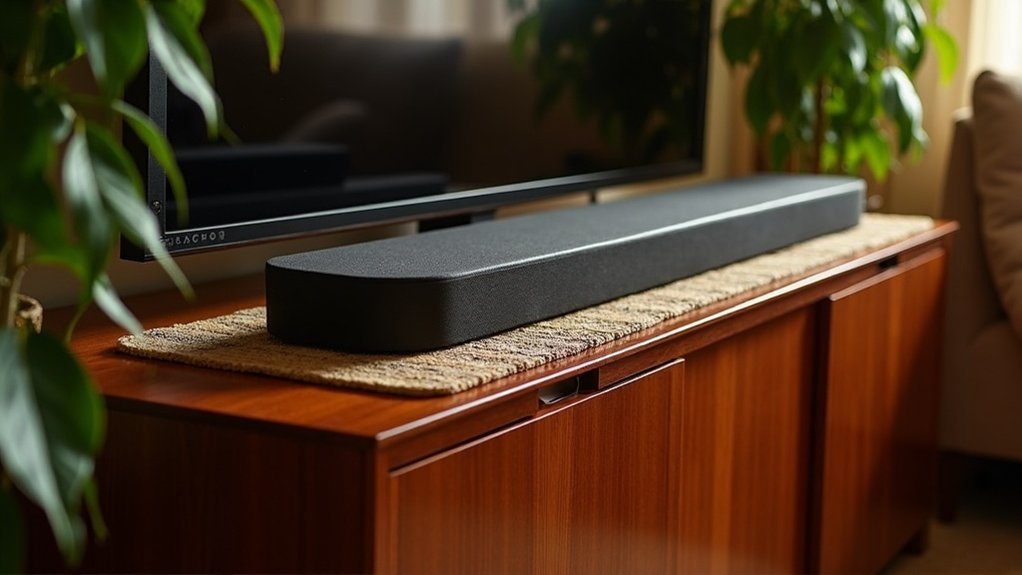
To minimize these vibrations, it’s best to place your soundbar on a solid surface; softer surfaces like carpets may absorb some of the sound but can also alter audio quality.
Additionally, keeping the soundbar away from walls and corners can help reduce resonance and boominess. Experimenting with different stands or mounts can assist you in finding the ideal position that limits vibration transfer, ensuring you enjoy clear audio without disturbances and enhancing your overall listening experience with your soundbar.
Importance of Isolation Pads
Isolation pads are crucial for minimizing vibrations from your soundbar’s subwoofer, which enhances audio clarity.
By reducing unwanted noise transfer to your furniture, these pads improve the overall sound quality, particularly for downward-firing subs.
Furthermore, they help prevent disturbances to neighbors, making them an ideal choice for apartment living.
Vibration Reduction Benefits
To enjoy an ideal audio experience with your soundbar, utilizing isolation pads is crucial for reducing unwanted vibrations from the subwoofer.
The vibration reduction benefits are substantial:
- Minimizes resonance: Prevents distortion and ensures that sound remains clear and crisp.
- Decouples subwoofer: Reduces sound transmission to surrounding furniture, allowing for focused bass in your listening area.
- Protects furniture: Shields surfaces from damage that can be caused by heavy vibrations.
Investing in quality isolation pads not only enhances sound clarity from your soundbar setup but also addresses noise concerns in apartment living, making your audio experience more enjoyable while keeping the peace with your neighbors.
Enhanced Sound Quality
Though many overlook the importance of isolation pads for soundbars, they play a vital role in enhancing sound quality by effectively absorbing vibrations from the speaker system.
By using these pads, you can greatly reduce the transfer of unwanted noise to your furniture, maintaining audio clarity and preventing resonances that cause rattling. This ideal performance allows your soundbar to operate without interference from nearby surfaces, improving the overall listening experience.
In apartments, where noise transfer can disturb neighbors, isolation pads are essential. Additionally, third-party isolation feet offer further stability, isolating the soundbar from hard surfaces and enhancing sound fidelity.
Optimal Subwoofer Placement
To achieve ideal soundbar placement, focus on locations that enhance sound quality while reducing vibrations.
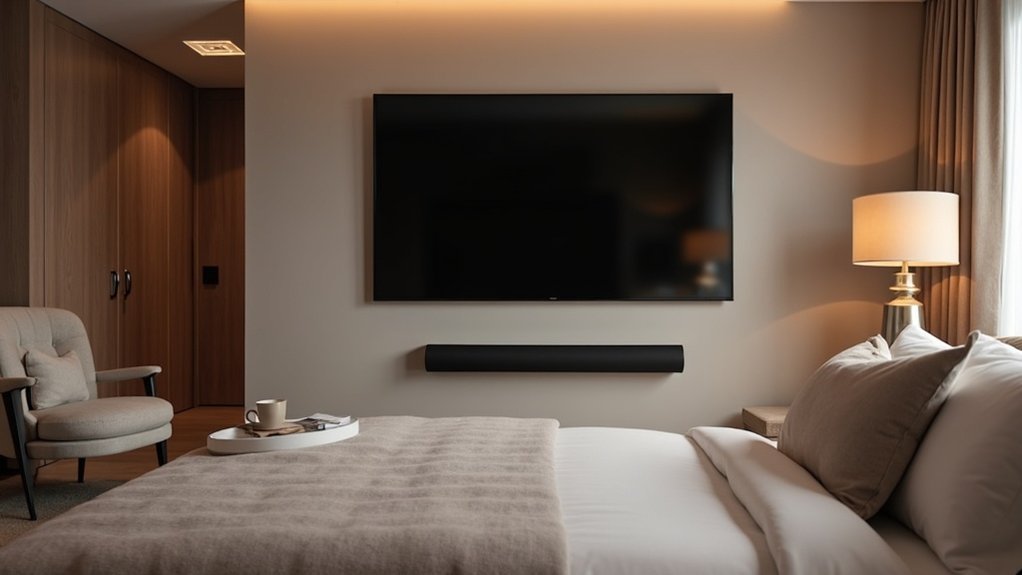
Consider mounting the soundbar at ear level for optimal audio experience, and ensure it’s positioned near the TV for a cohesive look.
Experiment with different placements to find the perfect position that balances performance and minimizes audio distortion.
Ideal Subwoofer Location
Where should you place your soundbar for ideal performance?
To achieve the best sound without excessive vibrations, consider these factors for the optimal soundbar location:
- Position the soundbar at ear level when seated to enjoy clearer dialogue and enhanced audio quality.
- Avoid placing it too close to walls or corners to minimize sound distortion and ensure a balanced soundstage.
- Experiment with different placements to find the position that provides the best sound clarity and immersion for your viewing experience.
Effective Vibration Reduction Techniques
While you might be tempted to place your soundbar wherever it fits, effective vibration reduction techniques can greatly enhance your audio experience.
Start by using isolation pads to diminish vibrations transferred to furniture. Avoid placing the soundbar too close to corners or walls, as these can amplify resonance and vibrations.
Position the soundbar at ear level for optimal sound clarity and bass response, which can reduce disturbances. Make sure there’s at least a few centimeters of clearance around the soundbar to promote airflow.
Finally, consider pairing your soundbar with a wireless subwoofer to achieve balanced sound distribution throughout your space, addressing dead spots and minimizing problematic vibrations effectively.
The Role of Floor Type
The type of floor in your space significantly influences how sound and vibrations from a soundbar are transmitted to surrounding furniture.
If you have hard floors, consider the following points:
- Hard surfaces allow sound to travel more freely, which can amplify vibrations.
- Carpeted areas can provide isolation, effectively reducing the impact of vibrations on furniture.
- Using third-party isolation pads can notably minimize unwanted vibrations.
With 64% of respondents reporting hard floors, it’s crucial to experiment with soundbar placement and isolation solutions to manage the effects of your floor type on sound transmission and maintain furniture stability.
Adjusting Subwoofer Orientation
Adjusting the orientation of your soundbar can greatly enhance sound clarity and improve your listening experience.
Position the soundbar at ear level to optimize sound quality and achieve a more immersive audio experience. Ensure that there are no obstructions in front of the soundbar, as blocked speakers can disrupt the room’s acoustics and reduce sound performance.
For soundbars with built-in subwoofers, place the unit on a solid surface to utilize the area for effective sound dispersion while keeping the front speakers clear.
Maintain at least three centimeters of clearance around the soundbar to allow for proper airflow, and avoid placing heavy objects on top, as they can affect sound quality and overall performance.
Experimenting With Settings
How can you fine-tune your soundbar to achieve ideal audio performance? Experimenting with settings can greatly enhance your audio experience while minimizing vibrations in your room.
- Utilize the auto-tuning feature on your soundbar for optimal calibration, which helps to reduce vibrations and enhance sound clarity.
- Adjust the soundbar’s EQ settings to tailor the audio output to your preferences, ensuring a balanced sound without excessive rumbling.
- If your soundbar supports it, consider connecting an external subwoofer and experimenting with its phase and crossover settings to optimize bass response.
Additionally, ensure that the volume levels are balanced across all channels to maintain quality sound.
These adjustments will help you enjoy clear audio while keeping vibrations from disrupting your furniture.
Tips for Apartment Living
Finding the right audio settings can greatly enhance your sound experience, especially in an apartment where noise control is essential. Here are some tips to minimize soundbar vibration:
| Placement | Benefits | Avoidance |
|---|---|---|
| Centered in room | Balanced sound left and right | Corners |
| Closer to seating | Better bass at lower volumes | Walls |
| Use of isolation pads | Reduces transfer of vibrations | Heavy furniture |