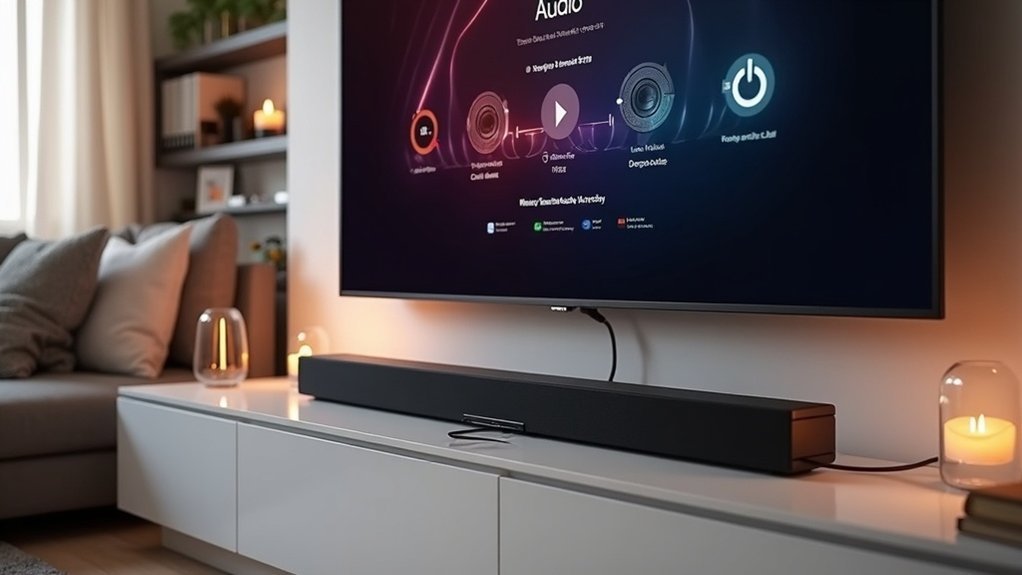
When selecting a soundbar, it’s crucial to ensure compatibility with essential TV audio formats such as Dolby Digital and PCM, which significantly enhance sound quality. For a more immersive experience, advanced formats like Dolby Atmos and Dolby TrueHD often require specific connections like HDMI ARC or eARC to deliver optimal performance. Keep in mind that older TVs may limit your options, so checking compatibility is vital. Want to dive deeper into how to maximize your sound experience with a soundbar? There’s a wealth of information available to help you!
Key Takeaways
- Soundbars commonly support audio formats like PCM and Dolby Digital for enhanced sound quality.
- Advanced formats such as Dolby Atmos and Dolby TrueHD require compatible TVs and soundbars to function optimally.
- HDMI ARC/eARC connections allow soundbars to access a wider range of audio formats compared to optical outputs.
- Older TV models may restrict available audio formats, which can limit the performance of soundbars.
- Always check the specifications of your soundbar and the settings of your TV to ensure optimal audio compatibility.
Understanding Audio Format Compatibility
When you’re setting up your soundbar, understanding audio format compatibility is essential for achieving the finest sound experience.
Soundbars typically support various audio formats, including PCM and Dolby Digital. The connection method, such as HDMI ARC or optical output, influences which formats can be transmitted.
Soundbars support multiple audio formats like PCM and Dolby Digital, with connection methods affecting format transmission.
For ideal surround sound, verify that both your TV and soundbar support enhanced formats like Dolby Atmos or Dolby TrueHD. However, older TVs may restrict your options.
To maximize audio quality through your soundbar, configure your TV’s audio settings correctly—set the output to PCM, for instance—to ensure seamless compatibility and superior sound performance.
Common Audio Formats Supported by Soundbars
After verifying your TV and soundbar are compatible, it’s essential to understand the audio formats that soundbars commonly support.
Most soundbars provide support for Dolby Digital and PCM, significantly enhancing audio quality. For those seeking an immersive audio experience, many models can decode advanced surround sound formats such as Dolby TrueHD and Dolby Atmos.
The method of connection plays a crucial role; HDMI (eARC/ARC) generally supports a wider range of audio formats compared to optical connections. Additionally, some soundbars offer LPCM for uncompressed audio playback, which delivers superior sound fidelity.
Always check your soundbar’s specifications for compatibility to ensure optimal performance with your audio technology.
Advanced Audio Formats for Enhanced Experiences
As you explore advanced audio formats for soundbars, you’ll discover that technologies like Dolby Atmos and Dolby TrueHD can dramatically enhance your listening experience.
These formats elevate sound quality, delivering an immersive soundstage with multi-channel audio. Here’s what to take into account when choosing a soundbar:
- Dolby Atmos: Offers 3D surround sound with overhead effects, creating a more dynamic audio experience.
- Dolby TrueHD: Provides lossless audio encoding up to 8 channels, ensuring pristine sound quality.
- Dolby Digital Plus: Enhances audio quality for streaming, supporting up to 7.1 channels for a richer sound.
- LPCM: Guarantees uncompressed, high-resolution audio playback for the best fidelity.
- HDMI ARC/eARC: Optimizes connections for maximum audio format support, allowing for seamless integration with your devices.
When selecting a soundbar, ensure it supports these advanced audio formats for the ultimate listening experience.
Connection Methods and Their Impact on Audio Formats
Understanding how connection methods impact audio formats is essential for maximizing your soundbar experience. When you use HDMI ARC, your soundbar can support high-quality audio formats like Dolby ATMOS and surround sound, significantly enhancing your overall listening experience.
Alternatively, optical output allows for PCM or Dolby Digital transmission, but may limit access to advanced audio formats. To ensure superior audio signal transmission, especially with 4K HDR content, opt for HDMI 2.1 cables.
Keep in mind that compatibility with audio formats such as Dolby Digital Plus and DTS can vary by TV model and soundbar software, which can directly affect your digital audio performance.
Make informed choices to unlock the full potential of your soundbar.
Choosing the Right Soundbar for Your Audio Needs
Selecting the right soundbar can significantly enhance your audio experience, especially when you’ve already considered how connection methods influence audio formats.
To ensure you make an informed choice, keep these crucial factors in mind:
- Compatibility: Ensure the soundbar supports your TV’s audio formats, such as Dolby Digital and Dolby Atmos.
- Connection Options: Look for support for HDMI ARC or eARC to facilitate a seamless setup and improve sound quality.
- Advanced Audio Formats: Consider soundbars that support advanced audio formats like Dolby TrueHD or DTS:X for a truly immersive surround sound experience.
- Channel Handling: Check if the soundbar can effectively handle 5.1 channel audio to deliver comprehensive surround sound.
- Additional Features: Explore extra features like built-in streaming capabilities and Bluetooth support for a versatile and convenient audio system.
Choose wisely to elevate your TV audio experience with the perfect soundbar!