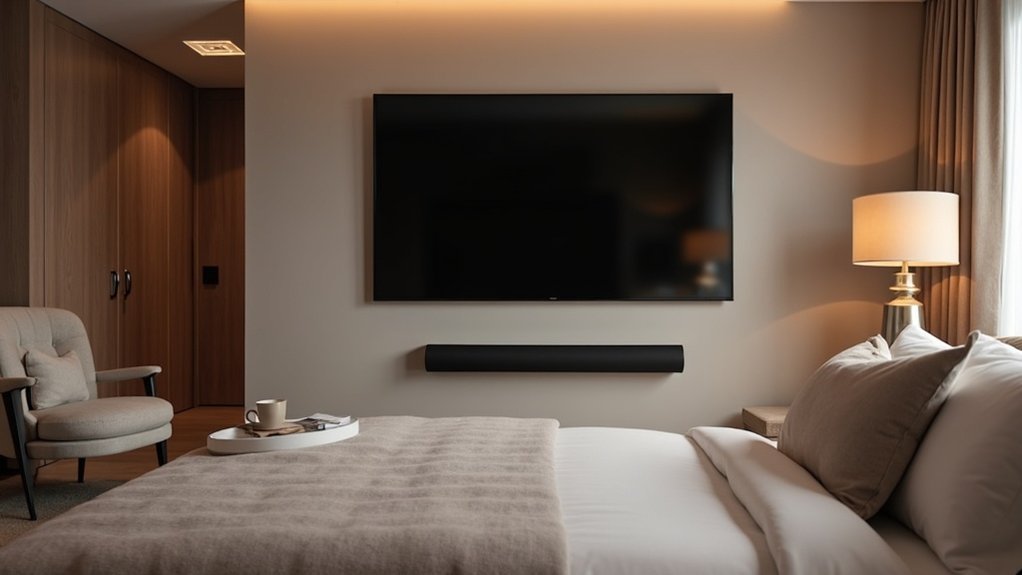
eARC dropouts on soundbars can occur due to various factors. Common culprits include compatibility issues between devices, subpar HDMI cables that compromise signal quality, and improper audio settings. If the HDMI ARC setting is not enabled on both your TV and soundbar, you are more likely to encounter audio interruptions. Regular firmware updates are essential for addressing known issues. There are effective troubleshooting steps and alternative solutions to improve your audio experience with soundbars further.
Key Takeaways
- CEC compatibility issues between devices can disrupt audio transmission, leading to dropouts in soundbars that utilize eARC technology.
- Poor quality or damaged HDMI cables may degrade the signal integrity, which can cause audio dropouts during playback on your soundbar.
- Long HDMI cable runs or cables lacking proper shielding can compromise signal quality, resulting in audio interruptions experienced through soundbars.
- Incorrect audio settings on the TV or soundbar, such as having HDMI ARC disabled, can contribute to audio dropouts in eARC-enabled soundbars.
- Regular firmware updates are crucial as they address bugs and enhance eARC performance, significantly reducing the likelihood of audio dropouts on soundbars.
Understanding Earc and Its Functionality
When connecting your soundbar to a TV, understanding eARC (Enhanced Audio Return Channel) is essential for optimizing your audio experience.
eARC is specifically designed to deliver high-quality audio formats such as Dolby Atmos and DTS:X through a single HDMI cable, significantly enhancing playback compared to standard ARC. It supports higher bandwidth, enabling lossless audio and multi-channel formats that elevate sound quality.
However, you may encounter audio dropouts due to device compatibility, HDMI cable quality, or CEC interference. To prevent these issues, ensure that all devices are eARC-compatible, use high-speed HDMI cables, and consider firmware updates for optimal performance.
This knowledge will help you get the best out of your soundbar setup.
Common Causes of Audio Dropouts
Audio dropouts in soundbar setups using eARC often stem from CEC compatibility issues between the soundbar and other devices.
Additionally, the quality of your HDMI cable can greatly affect signal integrity, leading to further disruptions in audio playback.
Addressing these two factors is essential for maintaining a stable audio experience with your soundbar.
CEC Compatibility Issues
Even though eARC is designed to function independently of CEC, conflicts arising from different manufacturers’ CEC implementations can result in frustrating audio dropouts on soundbars.
Many users encounter these dropouts, particularly with soundbars connected to devices like Sony TVs, when eARC and CEC settings aren’t aligned.
- Annoyance from interrupted movie nights with your soundbar
- Disappointment when gaming experiences are compromised by audio issues
- Frustration with the complexities of device settings affecting sound quality
To alleviate CEC-related audio dropouts on soundbars, consider using a Lindy CEC-less dongle to block CEC signals.
Additionally, power cycling your devices or keeping them in standby mode can improve eARC performance and minimize audio dropouts associated with CEC conflicts.
HDMI Cable Quality
While you mightn’t think about it, the quality of your HDMI cable plays a crucial role in ensuring a stable audio connection with your soundbar. Poorly manufactured or damaged HDMI cables can introduce interference, leading to inconsistent audio output and annoying dropouts.
Longer cables or those without proper shielding are especially vulnerable to signal degradation. To guarantee optimal eARC performance with your soundbar, use cables that comply with HDMI 2.1 specifications, particularly for high-resolution audio formats like Dolby Atmos.
Regularly check your HDMI cables for any physical damage, as even minor issues can compromise signal integrity and result in frustrating audio dropouts.
Ensuring Device Compatibility
To ensure seamless eARC performance with your soundbar, it’s crucial to confirm that all your devices are compatible with this advanced audio technology. Not every soundbar implements eARC or HDMI ARC consistently, which can lead to frustrating audio dropouts.
- Verify that your soundbar supports eARC for high-bandwidth formats like Dolby Atmos.
- Check the firmware versions of your soundbar to avoid performance issues.
- Use certified high-speed HDMI cables to maintain signal integrity and enhance your sound experience.
Importance of Proper Audio Settings
Proper audio settings are fundamental for maximizing the performance of your eARC-enabled soundbar, as they directly influence audio clarity and stability.
To ensure optimal sound, verify that the HDMI ARC setting is enabled on both your TV and soundbar to prevent audio dropouts. Adjust the digital sound output settings among options like auto, passthrough, and PCM to enhance audio performance.
Regular firmware updates for both your soundbar and TV are important, as they often fix known issues related to audio dropouts. Additionally, using high-quality HDMI cables that meet eARC specifications is essential to handle the required bandwidth for lossless audio transmission, further minimizing dropout risks.
Properly configuring these settings will ensure you enjoy the full potential of your soundbar.
Firmware Updates and Their Impact
Regular firmware updates are crucial for maintaining the performance and stability of your soundbar.
By addressing known issues and enhancing compatibility, these updates can significantly reduce audio dropouts, particularly when using eARC connections.
To ensure optimal sound quality, make it a priority to check for and install the latest firmware updates from the manufacturer of your soundbar.
Importance of Regular Updates
Although many soundbar users may overlook the importance of firmware updates, keeping your soundbar and connected devices up to date is crucial for achieving peak audio performance.
Regular updates often include bug fixes that enhance eARC functionality, significantly reducing audio latency and sync issues.
- Prevent frustrating audio dropouts during your favorite movies and music
- Ensure seamless compatibility with the latest audio devices and technologies
- Experience richer, more immersive sound quality that elevates your listening experience
Fixing Known Issues
When you encounter audio dropouts with your soundbar, addressing these issues through firmware updates can significantly enhance your eARC experience.
Regularly checking for firmware updates is essential, as manufacturers often release patches targeting audio sync problems and dropouts. Keeping your soundbar’s firmware up to date ensures compatibility with eARC features, markedly improving performance.
Additionally, it’s important to update your TV’s firmware alongside your soundbar to maintain optimal synchronization between devices. For the latest firmware versions and installation instructions, please refer to your soundbar’s support page.
This proactive approach effectively mitigates eARC issues and enhances your overall audio experience with your soundbar.
Enhancing Performance Stability
To enhance performance stability in your soundbar, it’s essential to routinely apply firmware updates.
These updates can significantly improve audio processing and reduce eARC-related dropouts. Manufacturers frequently release updates to address known issues, including latency and compatibility problems.
Keeping your firmware current ensures that your soundbar remains compatible with the latest technologies.
- Experience uninterrupted audio bliss
- Elevate your home entertainment experience
- Enjoy seamless connectivity with all devices
Regularly checking for updates on your soundbar and connected devices helps prevent mismatched firmware, which can lead to audio interruptions.
Testing performance after each update provides valuable insights into potential improvements and troubleshooting needs.
Troubleshooting Steps for Audio Issues
If you’re experiencing audio dropouts with your eARC-enabled soundbar, several troubleshooting steps can help you pinpoint and resolve the issue.
Start by power cycling all devices, including your TV and soundbar, to reset connections. Inspect your HDMI cables for damage; poor quality cables can impair audio performance.
Verify the HDMI ARC setting is enabled on your TV; toggling it off and on can refresh the connection. Check for firmware updates on all devices, as these often fix known eARC issues.
If problems persist, consider using a CEC-less dongle to block CEC calls while keeping eARC enabled.
Alternatives to Earc for Audio Connections
While eARC offers advanced features for high-quality audio transmission, several alternatives can provide reliable connections for soundbars without the complexities associated with HDMI.
Consider these options for connecting your soundbars effectively:
- Optical digital cables deliver stable audio signals without the complications of HDMI, making them a popular choice for soundbars.
- RCA audio cables provide straightforward stereo connections, ideal for integrating older devices with your soundbar setup.
- Coaxial digital cables guarantee high-quality audio transmission, ensuring an excellent listening experience from your devices to your soundbar.
Additionally, Bluetooth can serve as a wireless option for connecting soundbars, though it may introduce some latency.
Finally, using a dedicated audio receiver can simplify connections and enhance reliability, making these alternatives to eARC worth exploring for your soundbar setup.
Community Insights and Solutions
Community experiences with eARC audio dropouts in soundbar setups have highlighted various strategies and solutions that users have found effective.
Many users recommend power cycling devices or utilizing standby mode instead of complete shutdowns to mitigate audio dropouts. Additionally, the Lindy CEC-less dongle has emerged as a popular fix, blocking CEC calls while preserving eARC functionality.
It’s essential to consider installation factors; lengthy HDMI runs can degrade signal integrity, leading to more dropouts.
Engaging with community-shared troubleshooting steps enhances collective knowledge and helps you navigate eARC issues more efficiently, ensuring a better audio experience with your soundbar setup.