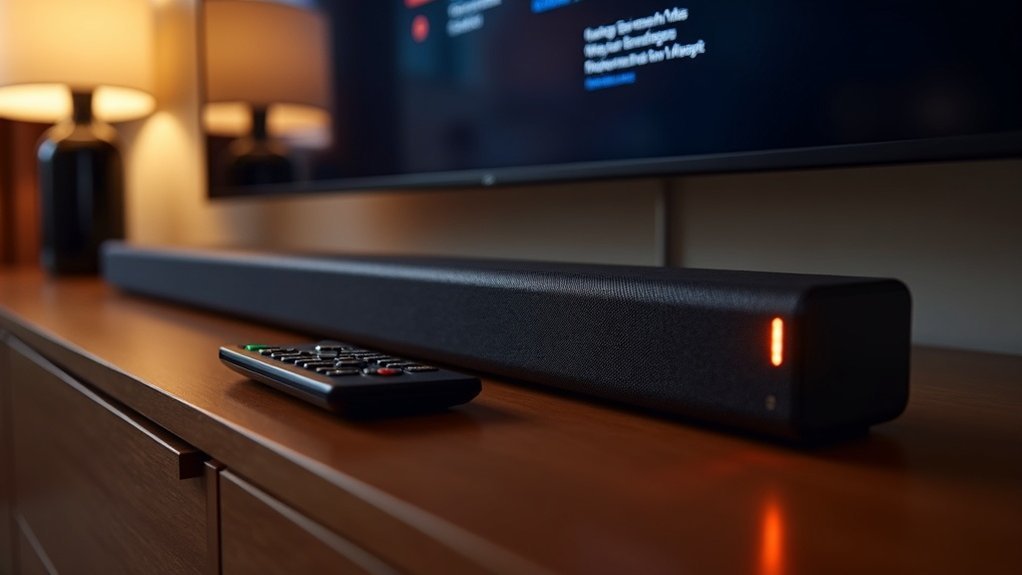
To enable PCM on your soundbar, begin by ensuring all connections are secure and that the correct input is selected. Use the remote to access the soundbar’s settings menu, then navigate to the audio settings. Look for options such as “Audio Format” or “Digital Audio Output” and select PCM. It’s important to also confirm that your TV or other connected devices are set to output PCM for optimal audio quality. With these settings adjusted, you can enjoy an enhanced sound experience. For more tips on troubleshooting and setup, feel free to explore additional resources.
Key Takeaways
- Confirm your soundbar supports PCM by checking its specifications and compatibility with connected devices.
- Access the soundbar’s settings menu using the remote and navigate to the audio settings section specifically for soundbars.
- Select the “Audio Format” or “Digital Audio Output” option and choose PCM for optimal sound quality tailored for soundbars.
- Ensure your TV’s audio settings are set to PCM, as many soundbars do not support other formats like Dolby Digital.
- Check all connections, using optical or HDMI ARC cables, to ensure proper audio transmission and functionality for your soundbar.
Understanding PCM and Its Benefits
Pulse Code Modulation (PCM) is a crucial digital audio format that converts analog signals into a series of binary values, allowing for high-quality sound reproduction without the limitations of compression.
One of the main advantages of PCM is its capability to provide uncompressed audio, resulting in exceptional sound fidelity and clarity for both music and dialogue. This format typically supports stereo sound, making it perfect for enhancing your home audio setups and soundbars.
Many audio devices, including CDs and streaming services, utilize PCM, ensuring seamless compatibility and enriching your listening experience.
Checking Your Soundbar Connections
To ensure your soundbar is properly receiving the PCM signal, begin by checking all cable connections.
Confirm that the correct input is selected on your soundbar to correspond with your audio source.
A quick review of these components can help prevent audio problems and ensure compatibility with the PCM format.
Verify Cable Connections
Verifying your cable connections is essential for ensuring optimal audio transmission from your TV to your soundbar.
First, check that the optical cable is securely connected from the TV’s optical output to the soundbar’s optical input. Make sure the soundbar is powered on and set to the correct input source.
If you’re using HDMI cables, confirm that they’re compatible with audio formats, ideally HDMI 1.4 or higher. Ensure that the soundbar isn’t muted and that the volume is set to an audible level.
Finally, refer to the soundbar’s user manual to verify any specific settings on the TV that are required for PCM format output.
Check Input Selection
Before enabling PCM on your soundbar, it’s essential to ensure that the correct input selection is made. This is crucial because the soundbar’s input must match your audio source for PCM audio to function correctly.
Here are some key points to consider:
- Verify connections: Ensure you’re using HDMI ARC, optical, or AUX connections.
- Select the correct input source: Confirm that the soundbar is set to the device you’re using.
- Review audio settings: Check that your TV’s audio output is configured to PCM.
Accessing the Soundbar Settings Menu
To access the soundbar settings menu, grab your remote and press the “Menu” or “Settings” button.
Use the directional arrows to navigate through the on-screen options, focusing on audio settings or sound modes.
Once you’re in the “Audio” or “Sound” section, you can adjust your settings to enable PCM, ensuring you get the best audio experience from your soundbar.
Navigating Soundbar Menu
Accessing your soundbar’s settings menu is a straightforward process that typically involves just a few steps.
Follow these guidelines to navigate effectively:
- Locate the remote and press the “Menu” or “Settings” button.
- Use the arrow keys to find the “Audio” or “Sound” settings section.
- Look for “Audio Format” or “Digital Audio Output” to select PCM.
After selecting your preferred audio format, use the enter button to confirm.
Don’t forget to save any changes before exiting the menu. This guarantees your soundbar is set to output audio in PCM format, optimizing your listening experience.
Adjusting Audio Settings
When you want to adjust the audio settings on your soundbar, start by locating the remote control or using the buttons on the device itself, depending on your model.
Navigate to the audio settings section, where you’ll find options for various audio formats, including PCM. Select the PCM option to enable it, which allows your soundbar to process audio signals in the Pulse Code Modulation format.
This setting ensures a clear digital output audio format, enhancing your overall listening experience. After making your adjustments, be sure to save your settings and exit the menu.
If you encounter any difficulties, refer to your user manual for specific instructions tailored to your soundbar model.
Selecting the PCM Audio Format
Selecting the PCM audio format is crucial for ensuring your soundbar delivers optimal audio quality. By choosing PCM, you enhance your soundbar’s performance and compatibility with various devices.
Here are key points to consider:
- PCM is a two-channel audio format, ideal for basic soundbars and stereo systems.
- Verify your soundbar’s specifications to ensure PCM compatibility.
- Make sure connected devices, such as Blu-ray players, also output in PCM to maintain consistent audio quality.
To set PCM, navigate to the audio settings on your TV or device and select it as the digital output format. This adjustment will help you achieve the best possible sound experience with your soundbar.
Testing Audio Playback
To ensure your soundbar is delivering optimal performance, it’s crucial to test audio playback.
Begin by verifying that your soundbar is connected to your TV or audio source using either an HDMI or optical cable, as this can influence the audio formats that are supported.
Next, adjust your TV’s digital output settings to PCM to ensure a stereo audio signal is transmitted.
Adjust your TV’s digital output settings to PCM for optimal stereo audio signal transmission.
Choose a compatible source, such as a streaming service or Blu-ray player, and play content that’s confirmed to be in PCM format.
Make sure to adjust the soundbar settings, steering clear of any special modes that could compromise playback clarity.
Finally, listen carefully for distinct audio output from both the left and right channels to confirm that the PCM processing is functioning correctly.
Troubleshooting Common Issues
Audio playback issues can disrupt your experience with soundbars, making it crucial to address common problems when enabling PCM. Here are some troubleshooting tips:
- Confirm your TV’s audio settings are set to PCM, as many soundbars don’t support formats like Dolby Digital.
- Check your connection type; using an optical or HDMI ARC cable is essential for selecting PCM.
- If PCM isn’t available, updating the firmware on both your soundbar and source device may enhance compatibility.
Refer to your soundbar’s user manual for specific PCM instructions, as the process can vary by model and manufacturer.