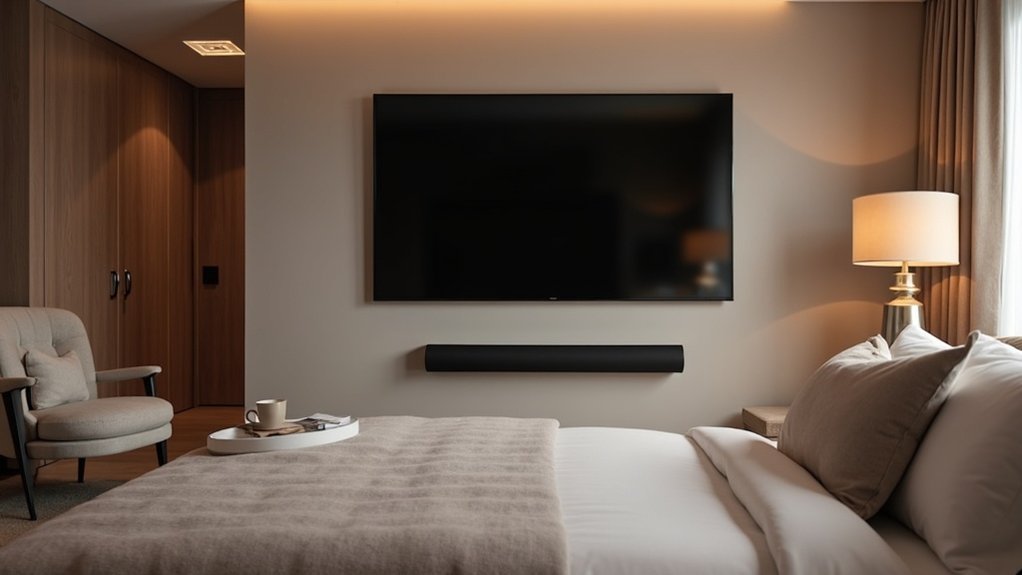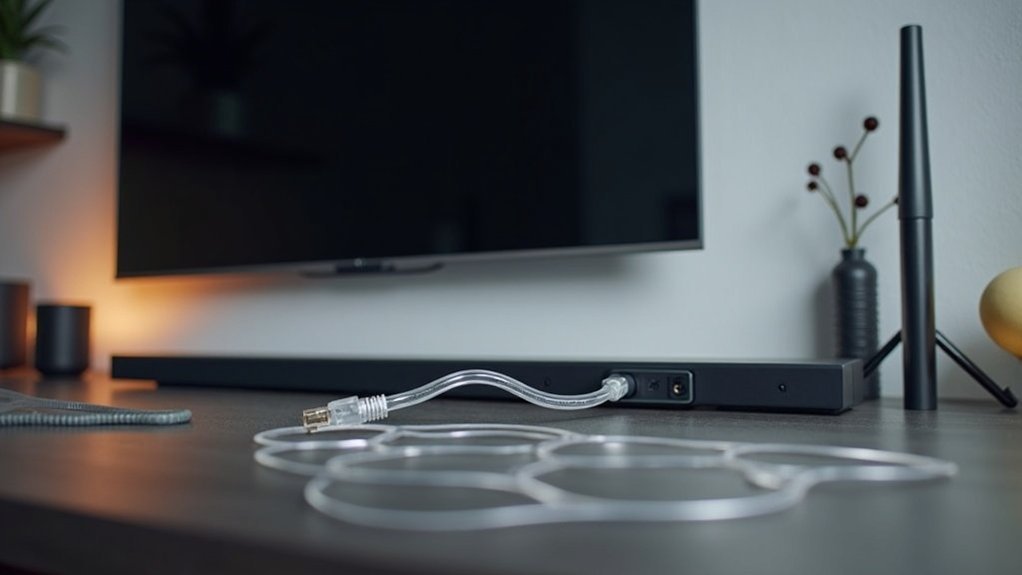
To connect your soundbar to your TV via Ethernet, first, ensure that both devices are equipped with Ethernet ports. Power on both the soundbar and the TV, then use an Ethernet cable to connect the soundbar to your router. It’s important to note that most soundbars typically utilize HDMI or optical cables for audio output instead of Ethernet. After connecting, adjust your TV’s audio settings to select the soundbar as the audio output. For a more optimized audio experience, continue exploring additional tips and techniques!
Key Takeaways
- Most soundbars do not use Ethernet for audio; they typically require HDMI ARC or optical connections for sound output.
- Ensure both the soundbar and TV have Ethernet ports and connect them with a compatible Ethernet cable if supported.
- Power on both devices and set the soundbar to wired connection mode if necessary after connecting the Ethernet cable.
- Select the soundbar as the external audio output in the TV’s audio settings for proper audio transmission.
- Restart both devices to refresh connections and troubleshoot if sound issues occur after setup.
Understanding Ethernet Connectivity for Soundbars
When connecting a soundbar to your TV, it’s essential to understand that most soundbars don’t feature Ethernet ports. Instead, they typically rely on HDMI or optical cables for audio transmission.
While some models might allow Ethernet connectivity for firmware updates or smart features, they don’t use an Ethernet connection for audio output. To relay audio, enable the HDMI ARC or eARC feature on your TV, which eliminates the need for direct Ethernet connections.
For stable internet access, consider using devices like the Sonos Boost for wireless network connectivity, ensuring each device connects independently for peak performance.
Required Equipment for Ethernet Connection
To connect your soundbar to the TV via Ethernet, you’ll need to check for an Ethernet port on both devices.
Make sure you have a compatible Ethernet cable ready, as this will provide a stable connection.
It’s essential to confirm that your soundbar supports this setup since most soundbars typically rely on HDMI or optical connections rather than Ethernet.
Necessary Cables Overview
Connecting a soundbar to your TV via Ethernet requires just a couple of essential components.
First, you’ll need an Ethernet cable to establish a wired internet connection, which is vital for accessing smart features on your soundbar. Ensure that both your soundbar and TV have compatible Ethernet ports, as most soundbars typically utilize HDMI or optical cables for audio output.
Once connected, verify that the soundbar is powered on and that the Ethernet cable securely links the soundbar to your router.
Finally, check your TV’s network settings to confirm it recognizes the connection for optimal performance of your soundbar.
Device Compatibility Check
How can you ensure your soundbar is compatible for an Ethernet connection? Performing a device compatibility check is essential. Follow these steps:
- Check your soundbar model: Confirm it supports Ethernet connectivity, as many soundbars utilize HDMI or optical connections instead.
- Inspect your TV: Verify it has an available Ethernet port for a direct connection to your soundbar.
- Verify settings: Make certain both your soundbar and TV are powered on and configured correctly to recognize Ethernet.
Don’t forget to securely connect the Ethernet cable and consult the user manuals for specific setup instructions.
This will help prevent connectivity issues and guarantee a smooth audio experience with your soundbar.
Step-by-Step Guide to Connecting Your Soundbar
Setting up your soundbar to work with your TV can greatly enhance your audio experience.
First, power on both your soundbar and TV. If necessary, set your soundbar to wired connection mode.
Locate the HDMI ARC or optical port on your soundbar and connect it to the corresponding port on your TV. If your soundbar supports Ethernet connectivity for smart features, locate the Ethernet port on your soundbar and connect one end of the Ethernet cable to it, while the other end goes to your router.
Ensure your TV is also connected to the router for internet access. After making these connections, navigate to your TV’s audio settings and select the soundbar as the external audio output.
Finally, test the audio playback to confirm everything is functioning correctly and enjoy an enhanced audio experience with your new soundbar.
Configuring Audio Settings on Your TV
Once you’ve connected your soundbar to the TV, it’s essential to configure the audio settings for the best sound experience.
Follow these steps to enhance your audio quality:
- Access the audio settings menu and select your soundbar as the primary audio output.
- Adjust the volume levels to match your listening preferences, ensuring they complement the soundbar’s output.
- Enable HDMI ARC if supported, allowing seamless audio transmission.
Don’t forget to explore sound modes tailored for different content types and regularly check for firmware updates.
These steps will optimize the connection between your soundbar and TV, creating an immersive audio experience tailored specifically for soundbars.
Troubleshooting Common Connection Issues
If you’re having trouble connecting your soundbar to your TV, start by ensuring that all cables are securely connected.
Check your TV’s audio settings to confirm that the correct output is selected for the soundbar.
Additionally, a quick restart of both the soundbar and the TV can often resolve persistent connection issues.
Verify Cable Connections
To ensure your soundbar is properly connected to your TV, start by checking all cable connections.
Make certain everything’s secure to avoid frustrating sound issues. Follow these steps:
- Confirm the HDMI or optical cable is tightly plugged into both the soundbar and the TV’s respective ports.
- Verify that the correct input source is selected on your TV for the soundbar connection.
- Restart both the soundbar and TV to refresh their systems, potentially resolving connectivity hiccups.
If problems persist, consult the user manual for troubleshooting steps and check your audio settings.
Don’t let loose connections ruin your audio experience!
Check TV Settings
How can you ensure your soundbar is set up correctly with your TV?
First, check the audio output settings on your TV; make sure it’s configured to use external speakers or the soundbar.
If you’re connecting via HDMI, enable the HDMI ARC/eARC option for optimal audio transmission.
Ensure your soundbar is powered on and functioning by checking the power indicator light.
Consult your TV’s manual to confirm it supports soundbar audio output and address any potential error codes.
Lastly, after making any adjustments, restart both your TV and soundbar to refresh the connection and ensure everything is operating smoothly.
Benefits of Wired Connections for Sound Quality
While many soundbar users appreciate the convenience of wireless connections, choosing a wired setup when linking your soundbar to your TV can significantly improve sound quality.
Here are three key benefits of a wired connection for soundbars:
Discover the top three advantages of using a wired connection for your soundbar to enhance your audio experience.
- Stable Audio Transmission: Enjoy immediate sound delivery with reduced latency, perfect for an immersive viewing experience.
- Enhanced Audio Quality: A wired connection minimizes interference and signal loss, ensuring a richer and more dynamic listening experience from your soundbar.
- Higher Bandwidth Formats: Revel in detailed sound without the compression issues that often plague wireless alternatives, allowing your soundbar to perform at its best.
Additional Tips for Optimizing Your Setup
Whether you’re setting up a new soundbar or fine-tuning your existing one, following a few simple tips can greatly enhance your audio experience.
First, verify that your soundbar and TV support HDMI ARC/eARC for peak audio quality; most soundbars connect this way. If you’re using a wireless connection for internet access, consider connecting your soundbar directly to your router with an Ethernet cable for better streaming performance.
Don’t forget to enable HDMI ARC in your TV’s settings and regularly check for firmware updates on both devices.
If you have multiple devices, a network switch can help reduce cable clutter while maintaining strong connectivity.
Optimizing your soundbar setup will ensure that you enjoy the best possible sound quality in your home entertainment system.